A villa garden is not just the green space around the house but the extension of the architecture outdoors. A well-planned villa garden design sets the stage for every moment of the day, from morning coffee to evening gatherings; pool, terrace, plants and light work as one. Drawing on our experience in hotel, residential and private villa projects, we have compiled the key principles behind a luxury outdoor space.

1. Spatial Layout: Thinking of the Garden as Rooms

Successful villa gardens are divided into zones by function, just like interiors, and these zones are linked by smooth transitions:

  • Arrival and entrance: The area that creates the guest’s first impression, defined by axes, lighting and accent plants.
  • Living terrace: A shaded seating and dining area connected to the living room. We cover this in detail in our article on outdoor seating area design.
  • Pool and sunbathing zone: The social heart of the garden.
  • Quiet corners: Private, green-framed spaces for reading, relaxing or meditation.
  • Functional areas: Kitchen garden, service entrance, technical spaces and storage; these should be screened from visible areas with planting.

2. Poolside Landscaping

The pool is the focal point of a villa garden, and the landscape around it needs careful planning both aesthetically and technically.

Plants Suitable for Poolsides

When choosing plants around a pool, leaf, flower and fruit drop, root structure, thorns and tolerance of chlorinated water should be considered as much as appearance. Successful options include:

  • Palms: The quickest way to create a resort atmosphere; they drop few leaves and their roots are relatively controlled.
  • Ornamental grasses and Phormium: Their wind-moved textures contrast beautifully with the still surface of the pool.
  • Pittosporum, Westringia and bay laurel: Evergreen shrubs that can be kept in shape provide privacy and a green frame.
  • Strelitzia (bird of paradise): Creates a tropical, sculptural accent in warm coastal climates.
  • Aromatic plants: Lavender and rosemary add fragrance to sunbathing areas, but as they attract bees they should be placed a little further back, not right beside the loungers.

What to avoid: Trees that drop lots of leaves and flowers (they constantly clog filters), spiny and sharp-tipped species (agave, some yuccas and cacti), trees with strong surface roots and species whose fruit stains paving should be kept away from the poolside.

Poolside landscaping and sun lounger area at a villa project in Beykoz
From our Beykoz villa project – a green frame around the pool, balancing the sunbathing area and shade.

Paving and Safety

Paving around a pool should be non-slip, comfortable to walk on barefoot and should not overheat in the sun. Light-toned travertine, natural stone with a non-slip finish and timber or composite decking are the most popular solutions. The paving should fall away from the pool and buildings, and surface water should be drained in a controlled way. You can explore material options in our articles on natural stone paving and hardscape landscaping.

3. Privacy: Seeing Without Being Seen

Privacy is one of the most valuable aspects of villa living. Using layered planted screens instead of high walls gives a softer and more prestigious result. Combining layers of trees, hedges and shrubs blocks neighbours’ views while preserving your own. To choose the right species, see our guide to hedge plants.

4. Framing the View

In villas with sea, forest or city views, the landscape should frame the view rather than block it. Low plants are used along sight lines and tall, vertical elements at the edges, presenting the view like a painting. On sloping sites, terracing and retaining walls create usable level areas and add layered depth to the view.

Terraced landscape and pool at the Mesa Bodrum villa project
From our Bodrum projects – terracing on a sloping site, bringing together the pool and planting.

5. Shade, Water and Light

  • Shade elements: Pergolas, timber canopies and well-placed trees make the terrace usable in summer. You can find options in our article on pergola designs.
  • Water features: In addition to the pool, small fountains, reflecting pools and wall cascades add sound and coolness to the garden. Explore our water feature work.
  • Lighting: Accent lights on tree trunks, path lighting and underwater pool lighting make the garden liveable at night too. More in our landscape lighting guide.

6. The Invisible Infrastructure

The longevity of a luxury garden depends on the infrastructure correctly installed below ground. Automatic irrigation, drainage, lighting cabling and pool technical lines should be planned as a whole before planting. Our landscape infrastructure works cover this entire process.

Villa Projects with Işık Peyzaj

With more than 25 years of experience, we handle design, plant supply and installation under one roof for hotel, residential and villa projects from Istanbul to Bodrum and from Alaçatı to Kemer. With large trees and mature plants prepared in our own nurseries, villa gardens look established and mature from the day they are handed over. You can explore one of our completed works, the V21 Villa project.

Frequently Asked Questions

Which plants should be planted by the pool?

Palms, ornamental grasses, Phormium, Pittosporum, Westringia and, in warm climates, Strelitzia are suitable low-litter species for poolsides.

Which trees should not be planted by the pool?

Species that drop a lot of leaves, flowers or fruit, have surface roots or are thorny should be kept away from the poolside.

What is the best paving material around a pool?

Light-toned travertine and natural stone with a non-slip finish, as well as timber or composite decking, are the most popular options because they stay cooler in the sun and are safe underfoot.

How long does villa garden design take?

The size, slope and scope of the site are decisive. Design, approval and installation can take anywhere from a few weeks to a few months depending on the project.

To create a bespoke landscape project for your villa, get in touch with us.
Whether a sapling will grow healthily for years is largely decided in its first days in the ground. When the right planting time is chosen, the root system adapts quickly to the new soil and the plant gets through its first summer heat with much less stress. Planting at the wrong time and with the wrong technique leads to drying out, stunted growth and disease.

Drawing on our production at our Yalova nursery under the supervision of our agricultural engineers and our planting experience on site, we have compiled what you need to know about planting saplings and trees.

The Best Time to Plant Saplings

The general rule is: plant while the plant is dormant or growing slowly and the soil is still warm and moist. In most of Turkey, the period that best meets these conditions is autumn. The soil is still warm enough for root growth, the air has cooled and the rains have begun; so the sapling roots over winter and enters spring strong.

However, the right time depends on how the sapling was produced:

Bare-Root Saplings

Fruit saplings and some deciduous trees are usually sold bare-root. These saplings should only be planted during dormancy, i.e. after leaf fall and before the buds break. In practice this covers November to March depending on the region. Do not plant on days when the ground is frozen or waterlogged.

Root-Balled Trees

For large trees lifted from the nursery with a root ball, the best periods are autumn and early spring. The risk of failure rises significantly for balled trees lifted and planted in midsummer.

Container-Grown Saplings

Plants whose roots have developed in a pot can be planted for most of the year because the root structure is not disturbed. Even so, the best results come in autumn and spring; when planting in summer, pay close attention to the watering schedule.

Evergreen Species

For evergreens such as olive, bay laurel, magnolia and conifers, the ideal time is early autumn while the soil is still warm, or spring once the risk of frost has passed. Avoid planting frost-sensitive species in midwinter.

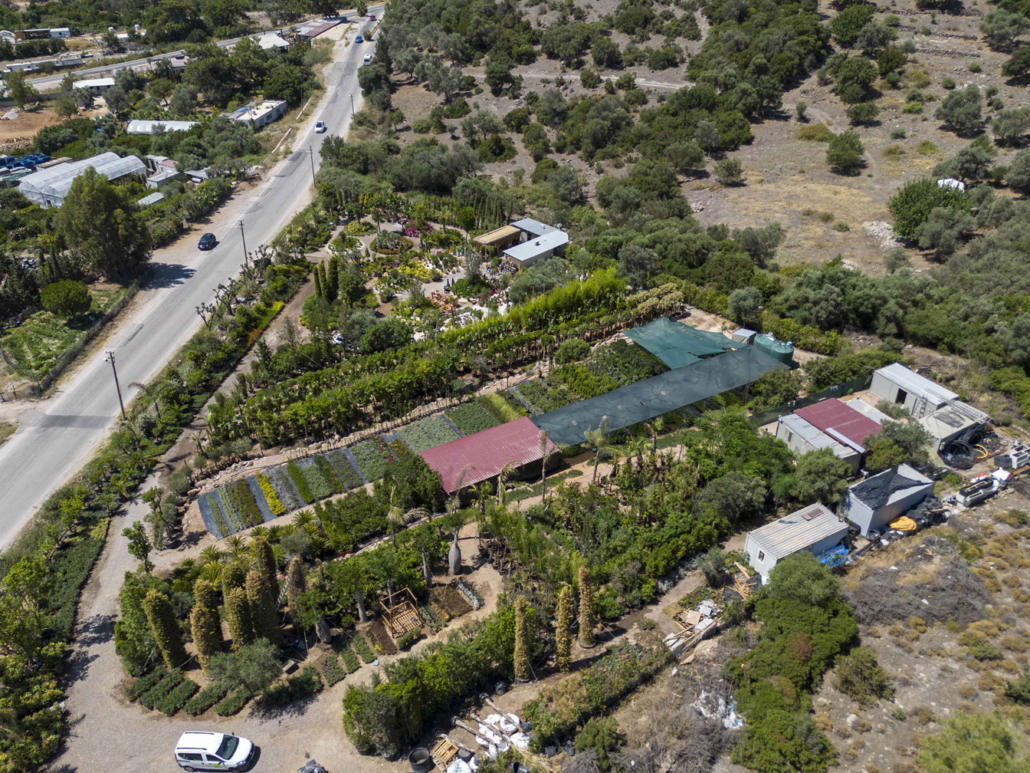
General view of Işık Peyzaj Bodrum Nursery
Işık Peyzaj Bodrum Nursery – saplings and trees prepared for projects are scheduled according to the planting season.

Planting a Sapling Step by Step

  1. Choosing the spot: Consider the species’ sun requirements, mature size and distance from buildings. For choosing trees, see our guide to evergreen and fast-growing trees.
  2. Planting hole: Dig a hole at least twice the width of the root ball and as deep as the root ball is tall. Loosen compacted soil on the sides of the hole.
  3. Soil improvement: Mix the excavated soil with well-rotted organic manure or compost. Heavy clay soils need drainage. For details, see our guide to soil preparation and fertilising.
  4. Root check: On bare-root saplings, cut broken and rotten roots with clean secateurs; gently tease out roots that have circled in the pot.
  5. Correct depth: The root collar should be at soil level, and on grafted saplings the graft union must be above the soil. Planting too deep is the most common and most harmful mistake.
  6. Backfilling: Firm gently as you fill the hole with the prepared soil; water now and then to remove air pockets.
  7. Settling water: A generous watering immediately after planting settles the soil around the roots.
  8. Staking and tying: Use a stake in windy areas and for large saplings; tie with a flexible material that will not constrict the trunk.
  9. Mulch: Spread 5-8 cm of mulch over the root zone, but keep it away from the trunk.

First-Year Care After Planting

  • Watering: In the first year, especially the first summer, regular deep watering is needed. Infrequent but deep watering rather than shallow, frequent watering encourages roots to grow deeper. Drip irrigation is the most efficient solution during this period.
  • Fertilising: Do not put strong chemical fertiliser in the planting hole, as it can damage new roots. Fertilise in a balanced way in spring.
  • Pruning: At planting, only broken, diseased and crossing branches are removed. Formative pruning of fruit saplings is planned according to the species; we cover this in our orchard guide.
  • Winter protection: Young and frost-sensitive saplings should be protected with fleece and mulch in their first winter. More in our guide to protecting plants in winter.

What to Look for When Choosing a Sapling

A healthy sapling should have a straight, undamaged trunk, a vigorous and balanced root system and branches with a form typical of the species. Roots spilling out of the pot or circling inside it show that the plant has been kept in a small container for too long. Buying certified saplings suited to the regional climate from a reliable nursery is half the battle.

At Işık Peyzaj, we plant the plants we grow and supply in our Yalova, Riva and Bodrum nurseries in the right season and with the right technique as part of our softscape works, and we also plan their early care.

Frequently Asked Questions

What is the best month for planting saplings?

In most of Turkey, October and November are the most productive months because the soil is warm and moist. Bare-root saplings can be planted between November and March when the ground is not frozen.

Can saplings be planted in winter?

Deciduous bare-root saplings can be planted in winter if the ground is not frozen or waterlogged. Midwinter is not recommended for frost-sensitive evergreens.

Can saplings be planted in summer?

Only container-grown saplings can be planted in summer, with intensive, regular watering. Planting in hot weather increases the risk of drying out.

Should fertiliser be put in the hole when planting?

Well-rotted organic manure or compost can be mixed into the hole. Strong chemical fertiliser is not recommended as it can damage young roots.

To plan this season’s planting with our professional team, get in touch with us.

Longer summer droughts, rising water costs and watering restrictions make a new approach to garden design essential. A garden planted with well-chosen drought-tolerant plants uses far less water than a traditional lawn-based garden, while offering texture, fragrance and life all year round. The Mediterranean garden is the most attractive expression of this approach and the best suited to our region.

Drawing on our experience at our Bodrum nursery and in our projects on the Aegean coast, we explain how to create a garden that lives on little water.

What Is a Mediterranean Garden?

A Mediterranean garden is a landscape approach using plants adapted to hot, dry summers and mild, wet winters, together with natural stone, gravel and earth-toned materials. Silvery and grey foliage, aromatic shrubs, ornamental grasses swaying in the wind and sculptural olive trees are its characteristic elements. It also aligns directly with the water-saving principles known internationally as “xeriscape”.

Drought-Tolerant Plants

Aromatic Shrubs

  • Lavender (Lavandula): With its purple flowers, fragrance and appeal to bees, it is the symbol of the Mediterranean garden. It does best in well-drained, chalky soils.
  • Rosemary (Rosmarinus officinalis): Upright and trailing forms are used for borders, slopes and wall tops.
  • Sage (Salvia): Many ornamental species flower for a long time and are extremely drought-tolerant.
  • Santolina and Teucrium: Low shrubs with silvery, fine-textured leaves, also suitable for formal clipping.
  • Myrtle (Myrtus communis): A glossy-leaved, fragrant native maquis species that can also be used as a hedge.

Flowering and Colourful Species

  • Oleander (Nerium oleander): Flowers continuously all summer and tolerates drought and salt. As all parts are poisonous, it should be kept away from children’s play areas.
  • Bougainvillea: Turns walls and pergolas into a riot of colour in warm coastal climates; frost-sensitive.
  • Rockrose (Cistus): With its papery spring flowers, one of the most elegant members of the native maquis.
  • Lantana and Callistemon (bottlebrush): Stand out for their long flowering season and heat tolerance.
Landscape with oleander and Mediterranean plants at a Bodrum project
From our Bodrum projects – a colourful, low-water composition with oleander and Mediterranean plants.

Ornamental Grasses

Ornamental grasses such as Pennisetum, Stipa tenuissima, Festuca glauca and Miscanthus move in the wind, catch the light and need little maintenance. Combined with lavender and sage, they create a natural, contemporary look.

Succulents and Sculptural Plants

Species such as agave, yucca, Phormium and Dasylirion create a sculptural effect in the garden with their strong silhouettes. Used singly or in groups on gravel, they create a modern dry-garden aesthetic. The monumental element that completes them is often the olive tree; for choosing trees, see our guide to garden trees.

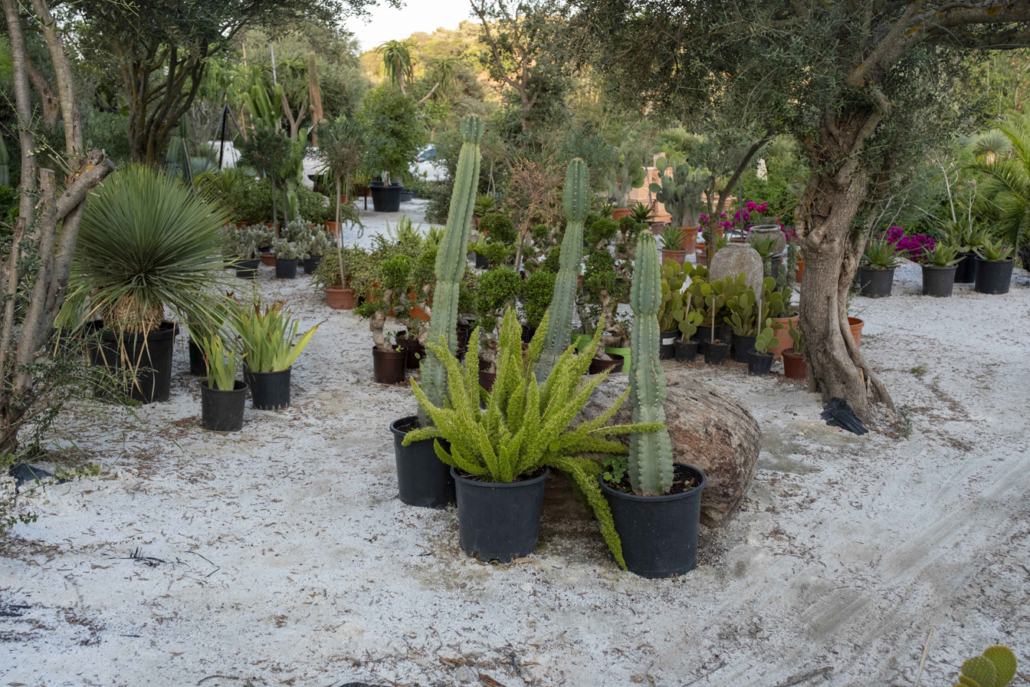
Agave and drought-tolerant plants at Işık Peyzaj Bodrum Nursery
Işık Peyzaj Bodrum Nursery – agave, yucca and drought-tolerant species prepared to suit the regional climate.

6 Golden Rules for a Low-Water Garden

  1. Use hydrozoning: Group plants with similar water needs in the same area; keep species that need frequent watering close to the house in a small area.
  2. Reduce the lawn: Limit lawn to areas that are actually used; turn the rest into gravel, ground cover and shrub beds.
  3. Use drip irrigation: Drip irrigation and smart irrigation systems deliver water straight to the root zone and minimise evaporation losses.
  4. Mulch: Gravel, crushed stone or organic mulch retains soil moisture and reduces weeds. For details, see our guide to decorative gravel.
  5. Ensure drainage: Most Mediterranean plants suffer more from waterlogged roots than from drought. Heavy soils should be improved with sand and gravel.
  6. Don’t neglect the first year: Even drought-tolerant plants need regular watering until their roots are established, usually for the first 1-2 years.

Choosing Materials for a Mediterranean Garden

Hard materials shape the character of the garden as much as plants do. Local natural stone, dry stone walls, travertine, terracotta pots and timber pergolas complete the Mediterranean aesthetic. With our hardscape and timber works, we turn the planting scheme into a complete composition.

Işık Peyzaj Bodrum Nursery selects and prepares species adapted to the regional climate for each project, providing a long-lasting plant base for villa, hotel and residential projects on the Aegean and Mediterranean coasts.

Frequently Asked Questions

Which garden plants need the least water?

Lavender, rosemary, sage, santolina, oleander, agave, yucca, rockrose and ornamental grasses can survive on very little watering once their roots are established.

Do drought-tolerant plants never need watering?

They need regular watering for the first 1-2 years. Once established, watering can be greatly reduced, but supplementary watering helps during very hot spells.

Can a Mediterranean garden be created in cold regions?

Lavender, rosemary, sage, ornamental grasses and some yuccas are relatively cold-hardy. Bougainvillea, oleander and some succulents should be chosen carefully in areas at risk of frost.

What can be used instead of lawn?

Gravel and crushed stone surfaces, aromatic ground covers (such as creeping thyme), ornamental grass beds and natural stone paving use far less water than lawn.

For a garden that stays vibrant all year with little water, contact our expert team.

The sunless corners of a garden are often seen as problem areas: lawn won’t grow, flowers won’t bloom, the soil stays bare. Yet with well-chosen shade-loving plants, these areas can become the coolest, most textured and most peaceful parts of the garden. A shade garden built on leaf form, colour and layered planting can create a far richer atmosphere than a sunny flower bed.

Defining the Shade Correctly

Before choosing plants, you need to understand what kind of shade the area gets:

  • Partial shade: Areas receiving 3-5 hours of sun a day, preferably morning sun. This is the condition with the widest choice.
  • Dappled (filtered) shade: Light filtering through the thin canopy of trees. Ideal for many woodland plants.
  • Full shade: North-facing walls, high-walled courtyards and areas under dense canopies that receive no direct sun.

Under trees, root competition and dryness are as decisive as light. Improving the soil with organic matter and watering regularly directly affect success in these areas.

Shrubs for Partial and Full Shade

Hydrangea

The star of shade gardens. Its large flower heads provide colour all summer. It performs best where it gets morning sun and afternoon shade. Depending on soil pH, the flower colour of some varieties can change from blue to pink.

Camellia and Azalea

With their elegant flowers in late winter and spring, they add colour to shady areas. They like acidic, humus-rich, well-drained soils and do particularly well in the Black Sea and Marmara climates.

Fatsia japonica and Aucuba

Fatsia’s large, glossy, hand-shaped leaves create a tropical effect even in shade. Spotted-leaved Aucuba brightens dark corners. Both are evergreen and tolerate full shade.

Boxwood and Cherry Laurel

These species keep their shape even in shade, forming the green framework that gives a shade garden structure and continuity.

Layered planting and stone wall at the Işık Peyzaj Mesa Bodrum project
Layered planting creates depth and texture in shaded areas.

Shade-Loving Perennials

  • Hosta: The classic shade-garden plant with broad, patterned leaves. Slug and snail control is important.
  • Ferns: Their fine-textured fronds create a woodland atmosphere; they love moist, shady spots.
  • Heuchera: Brings colour to shade with burgundy, caramel and lime-green foliage.
  • Helleborus (Christmas rose): One of the few shade-tolerant plants that flowers in midwinter.
  • Acanthus: Creates a strong accent with its sculptural leaves and upright flower spikes.
  • Astilbe: Adds early-summer colour with feathery flower plumes in moist, partly shaded areas.

Ground Covers Instead of Lawn in Shade

Lawn needs a few hours of direct sun a day to grow well. Shade-tolerant grass mixes are a partial solution, but thinning is inevitable in full shade. Ground cover plants are far more successful in these areas:

  • Ophiopogon and Liriope: Evergreen, low-maintenance species with fine, grass-like leaves.
  • Vinca (periwinkle): A fast-spreading ground cover with blue-purple flowers.
  • Ivy (Hedera): Effective as ground cover under trees and on slopes; should be used in a controlled way.
  • Pachysandra: Forms a dense carpet even in full shade.

If your existing lawn is thinning in the shade, our articles on roll-out turf and seed options and lawn diseases will also help.

Shade Garden Design Tips

  1. Use leaf texture: When flowers are scarce, placing large, fine, glossy and matt leaves side by side creates contrast.
  2. Choose light colours: White flowers and variegated or lime-green foliage brighten dark areas.
  3. Plant in layers: Layers of trees, shrubs and ground cover give a natural woodland feel.
  4. Balance with hardscape: Natural stone steps and walkways make a shade garden usable.
  5. Finish with light: Shade gardens take on an enchanting look in the evening with landscape lighting.

For city gardens surrounded by tall buildings, courtyards and inner gardens, we prepare plant lists tailored to the light conditions as part of our softscape and interior landscaping work.

Frequently Asked Questions

Which plants grow where there is no sun at all?

Fatsia, aucuba, ferns, ophiopogon, pachysandra, ivy and helleborus are among the species most tolerant of full shade.

Which plants flower in shade?

Hydrangea, camellia, azalea, astilbe and helleborus are the main plants that can flower in shade and partial shade.

What can be planted under trees?

Ground covers tolerant of root competition (vinca, ophiopogon, ivy) and shade shrubs are suitable. Improving the soil before planting increases success.

Does grass grow in shade?

Shade-tolerant grass mixes can be used in partial shade; in full shade, ground cover plants are a more sustainable solution.

To create a bespoke planting plan for your sunless garden, get in touch with us.

A tree planted in a garden shapes the shade, microclimate and character of the space for decades. That is why choosing trees is the longest-term decision in landscape design. Evergreen trees that stay green through winter provide privacy and life all year, while fast-growing species help the garden look mature quickly.

In this guide, drawing on production in Işık Peyzaj’s nurseries and our project experience, we have compiled the most popular garden trees, how to choose the right species for your climate and the technical points to consider when positioning them.

5 Questions to Ask Before Choosing a Tree

  1. What is the tree’s mature size? Base your decision on its canopy width and height in 15-20 years, not the sapling’s current height.
  2. What does the regional climate allow? A species that thrives on the Aegean coast may not survive winter in Central Anatolia.
  3. What role will the tree play in the garden? Shade, privacy, windbreak, focal point or fruit.
  4. How close is it to buildings and infrastructure? The distance from foundations, pools, pipelines and hard surfaces should be set according to the root character.
  5. How much maintenance can you commit? Leaf, flower or fruit drop and pruning needs vary from species to species.

Evergreen Trees for the Garden

Olive (Olea europaea)

The symbol of Aegean and Mediterranean gardens. With its silvery leaves, sculptural trunk and drought tolerance, it suits both modern and rustic designs. Old olive trees with characterful trunks create a strong focal point. As it is sensitive to hard, prolonged frosts, location matters in inland regions.

Magnolia (Magnolia grandiflora)

A prestigious tree with glossy, leathery leaves and large, fragrant white flowers in early summer. It likes deep, moist, slightly acidic soils and does particularly well in the Marmara and Black Sea climates.

Cedar (Cedrus) and Stone Pine (Pinus pinea)

Monumental options for large gardens and villa projects. The stone pine takes on an umbrella shape with age, creating a wide area of shade. Both develop very large canopies when mature, so they should not be chosen for small gardens.

Holm Oak (Quercus ilex)

An evergreen oak that tolerates drought and wind and responds well to pruning. It can be used as a formally shaped specimen or as an avenue tree.

Strawberry Tree (Arbutus unedo)

A Mediterranean tree of year-round interest with its reddish bark and the flowers and red fruit seen together in autumn; suitable for small and medium-sized gardens.

Cypress (Cupressus sempervirens)

With its narrow, vertical form it is ideal for creating axes, marking entrances and gaining height in tight spaces. Pencil-shaped varieties take up little room.

Palms

Indispensable in tropical and resort-style gardens. The Canary Island date palm (Phoenix canariensis) and Washingtonia do well in warm coastal climates, while the more cold-hardy Trachycarpus fortunei also succeeds in the Marmara region.

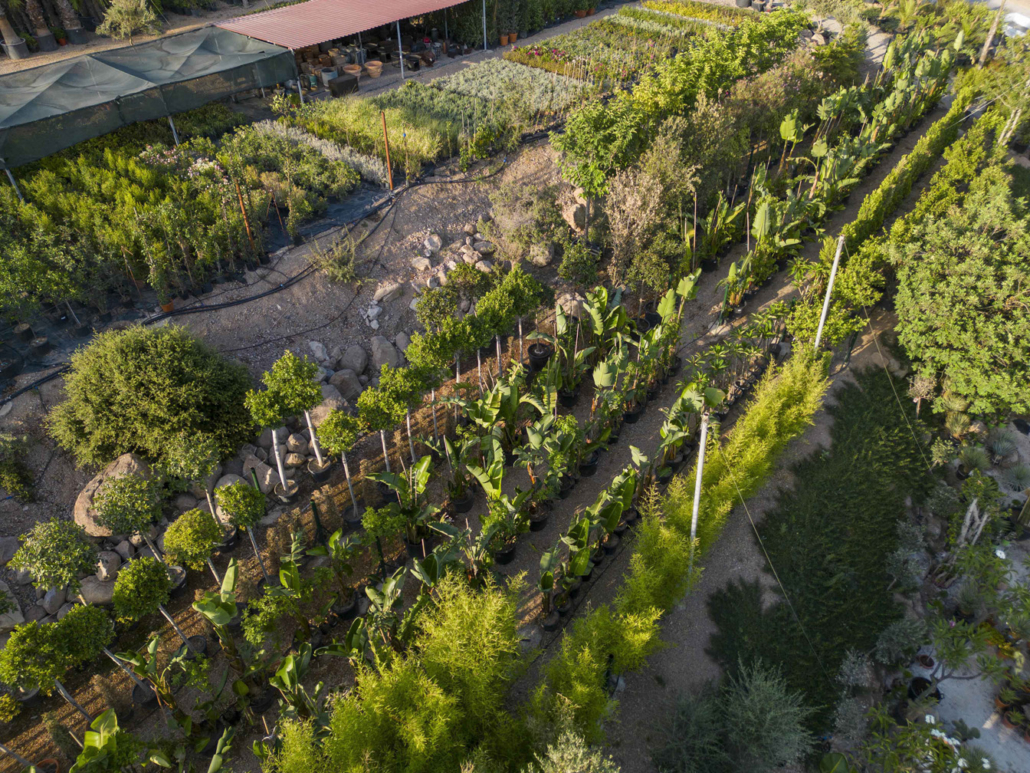
Tree and plant stock area at Işık Peyzaj Riva Nursery
Işık Peyzaj Riva Nursery – trees of different species and sizes are prepared for projects on a 24,000 m² site.

Fast-Growing Garden Trees

For gardens that want shade and volume quickly, relatively fast-growing species include:

  • Maple (Acer): Stands out especially for its autumn colour; deciduous.
  • Silk tree (Albizia julibrissin): With pink powder-puff flowers all summer and an umbrella shape, it provides light shade for seating areas.
  • Plane tree (Platanus): Grows very fast and gives broad shade, but is suited to large-scale areas.
  • Tree forms of cherry laurel and privet: Evergreen and quickly form a full canopy.

Caution: The strong, shallow root systems of fast-growing species such as willow, poplar and plane can damage buildings, pools, hard surfaces and utility lines. These species should be used in large areas at a sufficient distance from structures.

A Mature Garden Without the Wait: Using Large Trees

Instead of fast-growing species, working with large trees cared for in the nursery for years makes the garden look mature from day one. This approach is especially advantageous for slow-growing but valuable species such as olive, magnolia or cedar. Transporting large trees, preparing the planting pit, anchoring and the first-year watering programme require expertise; when done correctly, establishment rates are high.

At Işık Peyzaj, in our Riva, Bodrum and Yalova nurseries we prepare locally grown species as well as species selected from Europe, South America and the Far East for projects, and we take care of planting and early maintenance as part of our softscape works.

Technical Points in Tree Planting

  • The planting pit should be at least twice as wide as the root ball, and the root collar should not be buried below soil level.
  • In heavy clay soils, drainage measures should be taken so that water does not collect at the bottom of the pit.
  • Large trees should be secured against wind with stakes or underground anchoring systems.
  • Regular, deep watering for the first two years is the most critical condition for root development.
  • For sensitive species planted before winter, frost and cold protection measures should be planned.

Frequently Asked Questions

What is the best evergreen tree for a garden?

It depends on the region. Olive, holm oak and strawberry tree do well in the Aegean and Mediterranean; magnolia, cedar and cherry laurel in the Marmara region.

How far from the house should trees be planted?

As a general rule, leave a distance equal to the tree’s mature canopy radius. For species with aggressive roots, this distance should be increased further.

What is the best season for planting trees?

Autumn is the best time for root development thanks to warm soil and rainfall. Container-grown trees can also be planted safely at other times, except midwinter and the heat of summer.

Which tree is suitable for a small garden?

Strawberry tree, pencil cypress, olive, crape myrtle and small maples can be used even in limited spaces without upsetting the scale.

To choose the best trees for your garden together and see the options in our nurseries in person, get in touch with us.

A hedge is one of the quickest ways to change the character of a garden. Well-chosen hedge plants provide privacy, cut wind and dust, soften street noise and give the garden a clear frame. The wrong choice, on the other hand, means a wall that either stays gappy for years or grows out of control.

In this guide, based on production in Işık Peyzaj’s nurseries and our field experience, we cover evergreen and fast-growing hedge plants, the conditions in which each stands out, and the finer points of planting and pruning for a long-lasting hedge.

What to Consider When Choosing a Hedge Plant

There is no single “best hedge plant” for every garden. The main criteria that determine the choice are:

  • Target height: A 50 cm border and a 3-metre privacy screen are not made with the same species.
  • Climate and location: Salt and wind on the coast, and frost and drought inland, are decisive.
  • Sun/shade: Some species stay dense in partial shade while others thin out on the sunless side.
  • Growth rate and maintenance: Fast-growing species close up quickly but need more frequent pruning.
  • Visual character: Choose between glossy leaves, coloured new growth, flowers or needle-leaved textures.

Evergreen and Fast-Growing Hedge Plants

Privet (Ligustrum)

One of the most widely used hedge plants in Turkey. It grows fast, responds well to frequent pruning and quickly forms a dense wall. It tolerates urban conditions, pollution and different soil types. In very harsh winters some species may lose leaves, so the species and variety should be chosen according to the region.

Photinia

Known for varieties such as ‘Red Robin’, photinia adds colour to the hedge with bright red shoots in spring and after pruning. It grows moderately fast and can be kept in shape up to 2-3 metres. It likes well-drained soils that do not hold water.

Bay Laurel (Laurus nobilis)

The classic hedge plant of Mediterranean and Aegean gardens. Its dark green, aromatic leaves create a hedge that is both elegant and in keeping with the region’s identity. It tolerates drought and heat, grows at a moderate rate and takes very well to geometric shapes.

Cherry Laurel (Prunus laurocerasus)

With its broad, glossy leaves and fast growth, it is ideal for tall, full hedges. Its high shade tolerance means it also does well under trees or on north-facing sides.

Thuja and Leyland Cypress

The choice for those who want a dense, vertical, needle-leaved look. Leyland cypress grows very fast and quickly forms a tall screen, but can get out of control if not pruned regularly. Thuja is slower but more disciplined. In both species it is unrealistic to expect regrowth from old, browned wood, so pruning should be regular and moderate.

Japanese Pittosporum (Pittosporum tobira)

Stands out in coastal gardens thanks to its tolerance of salty winds. Its fragrant white spring flowers add extra value. It is one of the species we use most often in coastal projects such as Bodrum and Çeşme.

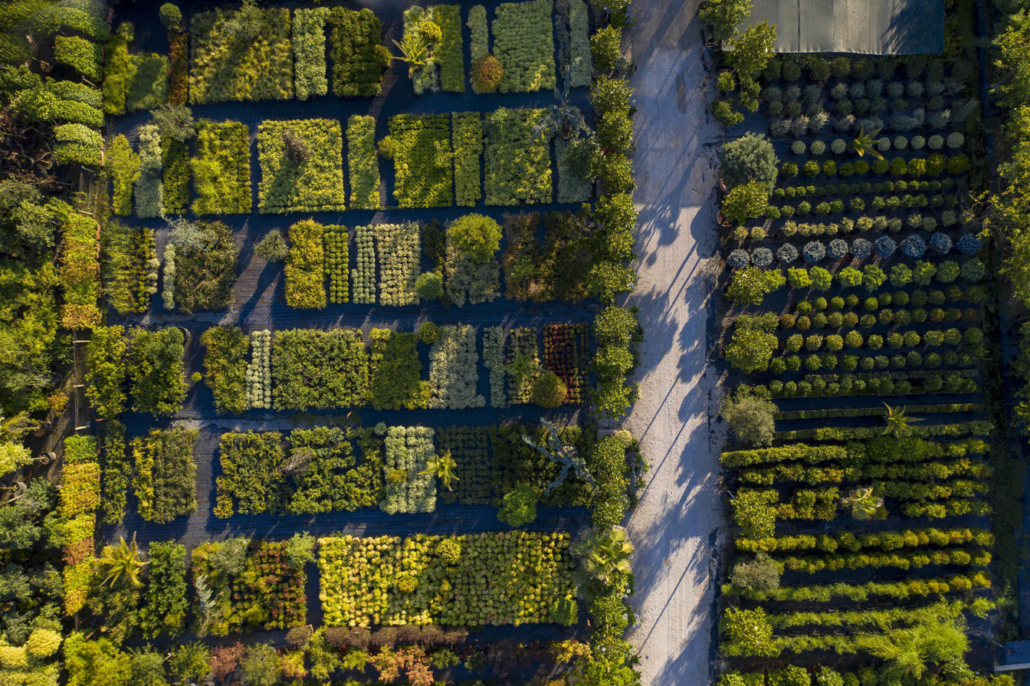
Hedge and shrub production area at Işık Peyzaj Bodrum Nursery
Işık Peyzaj Bodrum Nursery – hedge plants and shrubs being prepared for shipment to site.

For Low Hedges and Borders: Boxwood and Alternatives

An essential of classic and formal gardens, boxwood (Buxus) grows slowly and allows very fine shapes. It should be noted that in recent years the box tree moth has made regular monitoring and, where needed, treatment necessary. As alternatives for low borders, Euonymus japonicus varieties, compact Ilex crenata and, in dry gardens, lavender or rosemary can be used.

Thorny Hedge Plants for Security

If a physical barrier is wanted at the garden boundary, firethorn (Pyracantha) and berberis species are effective options. Firethorn also offers visual value with its orange-red berries in autumn. These species are best not used right next to play areas and paths.

How to Plant a Hedge

  1. Ground preparation: A trench 50-60 cm deep and wide is dug along the hedge line and the soil enriched with organic matter. For details, see our guide to preparing garden soil.
  2. Planting distance: Although it depends on the species and plant size, single-row hedges usually have 2-4 plants per metre. For faster coverage, a double row in a staggered (zigzag) pattern can be used.
  3. Distance from walls and boundaries: Plant at least 50-60 cm in from a wall or fence so that both faces of the hedge can be pruned.
  4. Watering: A drip irrigation system along the hedge line guarantees root development in the first two years and saves water.
  5. Mulching: Mulch spread over the root zone after planting retains moisture and reduces weeds.

The best planting times for evergreen hedge plants are autumn, while the soil is still warm, and early spring once the risk of frost has passed. Container-grown plants can be planted for most of the year with proper care.

Hedge Pruning: The Secret of a Long-Lasting, Dense Hedge

The most common mistake with hedges is leaving the top wider than the base. The lower branches then get no light and the hedge thins at the bottom. The correct shape is a slightly trapezoidal section, a little wider at the base than at the top. Fast-growing species generally need 2-3 trims a year and slow-growing ones 1-2. Avoiding heavy pruning during the bird nesting season (late spring) is also a nature-friendly practice.

Light tipping in the first years after planting encourages side branching and helps the hedge fill out from the base. For regular care, ask about our landscape maintenance service.

Which Hedge Plant for Which Garden?

  • Coastal and windy areas: Pittosporum, bay laurel, Euonymus, Elaeagnus.
  • Quick privacy: Privet, cherry laurel, Leyland cypress.
  • Colour and dynamism: Photinia.
  • Formal and classic gardens: Boxwood, Ilex crenata, bay laurel.
  • Shady side: Cherry laurel, Euonymus.

At Işık Peyzaj, we grow and supply hedge plants in different sizes and forms in our Riva, Bodrum and Yalova nurseries and plant them on site as part of our softscape works. Using larger, pre-shaped plants makes the hedge effective in its first season instead of after years.

Frequently Asked Questions

What is the fastest-growing hedge plant?

Leyland cypress, privet and cherry laurel are among the fastest-growing species. But speed should not be the only criterion; fast-growing species need more frequent pruning.

Which hedge plants keep their leaves in winter?

Bay laurel, photinia, cherry laurel, pittosporum, boxwood, thuja and Leyland cypress are the main options that stay green all year.

When are hedge plants planted?

Autumn is the ideal time; early spring is also suitable. Container plants can be planted for most of the year with correct watering.

How far apart should hedge plants be?

Depending on the species and plant size, usually 25-50 cm, i.e. 2-4 plants per metre.

To choose the right hedge plant for your garden and leave the installation to our professional team, get in touch with us.