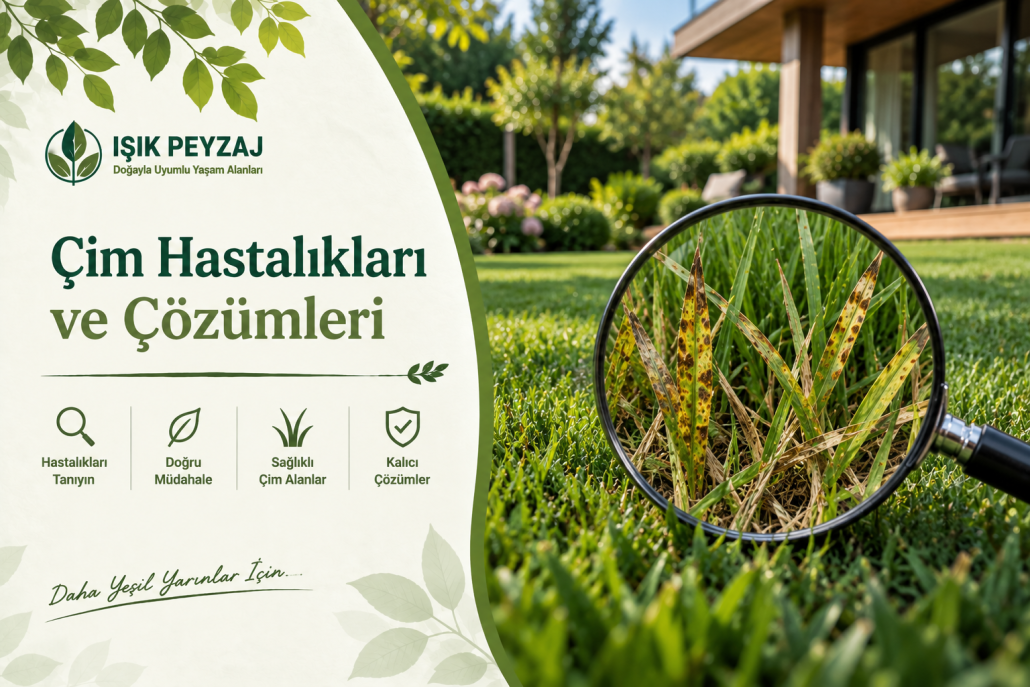
A healthy, green lawn is the most eye-catching part of a garden, but lawns are also prone to various diseases and problems. Lawn diseases are mostly the result of incorrect care, excess moisture and hot weather. Hot, humid days in summer especially create favourable conditions for fungal diseases. The good news is that most of these problems can be prevented with the right knowledge and solved with early intervention.
In this guide we cover the causes of lawn diseases, common problems, prevention, correct care and common mistakes. For the effect of grass type on lawn health, see our guide roll-out turf or seeded lawn?
Causes of Lawn Diseases
Most lawn problems arise not from a single cause but from a combination of factors. The most common are over- or under-watering, poor drainage, the wrong mowing height, unbalanced feeding and insufficient air flow. Watering in the evening in particular keeps the lawn damp overnight and encourages fungal growth. Recognising these factors is the first step in both preventing and solving disease.
Common Lawn Problems
Lawn problems show themselves through different symptoms. Correct diagnosis is the key to the right solution.
Yellowing
Yellowing is usually caused by overwatering, nutrient deficiency or root problems. Patchy yellowing often points to uneven watering.
Fungal Diseases
Fungal diseases, seen in hot and humid conditions, create rings, spots or rotten patches in the lawn. Increasing air flow and reducing moisture make these problems recede.
Drying Out and Thinning
Insufficient watering, compacted soil and heavy use make the lawn weak and leave bare patches.
Preventing Lawn Diseases
With lawn diseases, prevention is far more effective than cure. Correct watering is at the heart of this: watering early in the morning and in balance allows the lawn to dry during the day. An efficient drip irrigation system and correctly set automatic systems maintain the moisture balance. Regular aeration, balanced feeding and not mowing too short also increase resistance to disease. A healthy, strong lawn is the best defence against disease.
Correct Lawn Care
A healthy lawn is maintained with regular, correct care. The mowing height should suit the grass type; never cut more than a third off at a time. Regular aeration loosens compacted soil and lets the roots breathe. Seasonal feeding nourishes and strengthens the lawn. Watering should be infrequent but deep rather than frequent and shallow, encouraging roots to go deeper. Grass type also directly affects resilience; our guide to lawn irrigation systems and costs offers complementary information.
Lawn Problems by Season
Lawn diseases appear in different forms through the seasons, so care must be adapted to the season. In spring, rising humidity and unsettled temperatures favour fungal diseases; aeration and balanced watering come to the fore. In summer, hot, humid days increase fungal risk while insufficient watering leads to drying and thinning; morning watering and the right mowing height are critical. Autumn is an important time to prepare the lawn for winter; aeration and balanced feeding strengthen the roots. Knowing the specific risks of each season is the most effective way to prevent problems before they arise.
The Importance of Early Diagnosis
The decisive factor with lawn problems is spotting them early. A little yellowing, a few spotted areas or a patch starting to thin are often the first signs of a bigger problem. Spotted early, they can often be solved simply by adjusting the watering regime or care routine. Ignored, the problem can spread across the whole lawn and become much harder to repair. Regularly observing the lawn and tracking changes in colour and texture is therefore an integral part of care. Early diagnosis is the most economical solution in terms of both time and effort.
The Role of Soil and Drainage
The foundation of a healthy lawn is laid where it is often unseen: in the soil. Compacted, poorly drained soil causes water to pool on the surface and roots to be starved of air, creating an ideal environment for fungal diseases. Regular aeration loosens compacted soil and lets roots breathe. Good drainage allows excess water to drain away, preventing root rot. When soil structure and drainage are right, the lawn gains its strongest resistance to disease; the path to a healthy lawn therefore runs through proper soil preparation.
Common Mistakes in Lawn Care
A few common mistakes in lawn care invite disease.
- Watering in the evening: A lawn that stays damp overnight becomes prone to fungal diseases.
- Overwatering: Constantly wet soil leads to root rot and fungal growth.
- Mowing too short: Scalping the lawn weakens it and puts it under stress.
- Unbalanced feeding: Too much or too little fertiliser wears the lawn down instead of strengthening it.
Avoiding these mistakes keeps the lawn healthy, dense and disease-resistant.
Frequently Asked Questions
Why has my lawn turned yellow?
The most common causes of yellowing are overwatering, nutrient deficiency and root problems. Patchy yellowing usually indicates uneven watering; the watering regime and feeding should be reviewed.
How can lawn fungal diseases be prevented?
Fungal diseases are prevented by reducing moisture and increasing air flow. Watering in the morning rather than the evening, not mowing too short and balanced feeding are the most effective measures.
When should a lawn be watered?
Lawns should be watered early in the morning. This lets water reach the soil before it evaporates and allows the lawn to dry during the day; evening watering increases the risk of disease due to moisture.
Can a diseased lawn be repaired?
Yes. Most lawn problems diagnosed early can be resolved by correcting watering and care. Seriously damaged areas are repaired with aeration and reseeding.