The sunless corners of a garden are often seen as problem areas: lawn won’t grow, flowers won’t bloom, the soil stays bare. Yet with well-chosen shade-loving plants, these areas can become the coolest, most textured and most peaceful parts of the garden. A shade garden built on leaf form, colour and layered planting can create a far richer atmosphere than a sunny flower bed.
Defining the Shade Correctly
Before choosing plants, you need to understand what kind of shade the area gets:
- Partial shade: Areas receiving 3-5 hours of sun a day, preferably morning sun. This is the condition with the widest choice.
- Dappled (filtered) shade: Light filtering through the thin canopy of trees. Ideal for many woodland plants.
- Full shade: North-facing walls, high-walled courtyards and areas under dense canopies that receive no direct sun.
Under trees, root competition and dryness are as decisive as light. Improving the soil with organic matter and watering regularly directly affect success in these areas.
Shrubs for Partial and Full Shade
Hydrangea
The star of shade gardens. Its large flower heads provide colour all summer. It performs best where it gets morning sun and afternoon shade. Depending on soil pH, the flower colour of some varieties can change from blue to pink.
Camellia and Azalea
With their elegant flowers in late winter and spring, they add colour to shady areas. They like acidic, humus-rich, well-drained soils and do particularly well in the Black Sea and Marmara climates.
Fatsia japonica and Aucuba
Fatsia’s large, glossy, hand-shaped leaves create a tropical effect even in shade. Spotted-leaved Aucuba brightens dark corners. Both are evergreen and tolerate full shade.
Boxwood and Cherry Laurel
These species keep their shape even in shade, forming the green framework that gives a shade garden structure and continuity.

Shade-Loving Perennials
- Hosta: The classic shade-garden plant with broad, patterned leaves. Slug and snail control is important.
- Ferns: Their fine-textured fronds create a woodland atmosphere; they love moist, shady spots.
- Heuchera: Brings colour to shade with burgundy, caramel and lime-green foliage.
- Helleborus (Christmas rose): One of the few shade-tolerant plants that flowers in midwinter.
- Acanthus: Creates a strong accent with its sculptural leaves and upright flower spikes.
- Astilbe: Adds early-summer colour with feathery flower plumes in moist, partly shaded areas.
Ground Covers Instead of Lawn in Shade
Lawn needs a few hours of direct sun a day to grow well. Shade-tolerant grass mixes are a partial solution, but thinning is inevitable in full shade. Ground cover plants are far more successful in these areas:
- Ophiopogon and Liriope: Evergreen, low-maintenance species with fine, grass-like leaves.
- Vinca (periwinkle): A fast-spreading ground cover with blue-purple flowers.
- Ivy (Hedera): Effective as ground cover under trees and on slopes; should be used in a controlled way.
- Pachysandra: Forms a dense carpet even in full shade.
If your existing lawn is thinning in the shade, our articles on roll-out turf and seed options and lawn diseases will also help.
Shade Garden Design Tips
- Use leaf texture: When flowers are scarce, placing large, fine, glossy and matt leaves side by side creates contrast.
- Choose light colours: White flowers and variegated or lime-green foliage brighten dark areas.
- Plant in layers: Layers of trees, shrubs and ground cover give a natural woodland feel.
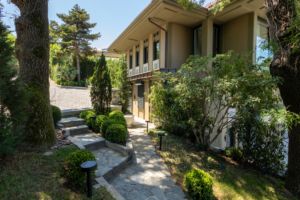
- Balance with hardscape: Natural stone steps and walkways make a shade garden usable.
- Finish with light: Shade gardens take on an enchanting look in the evening with landscape lighting.
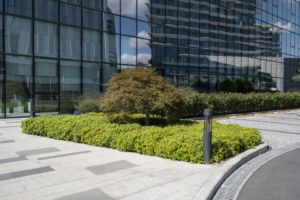
For city gardens surrounded by tall buildings, courtyards and inner gardens, we prepare plant lists tailored to the light conditions as part of our softscape and interior landscaping work.
Frequently Asked Questions
Which plants grow where there is no sun at all?
Fatsia, aucuba, ferns, ophiopogon, pachysandra, ivy and helleborus are among the species most tolerant of full shade.
Which plants flower in shade?
Hydrangea, camellia, azalea, astilbe and helleborus are the main plants that can flower in shade and partial shade.
What can be planted under trees?
Ground covers tolerant of root competition (vinca, ophiopogon, ivy) and shade shrubs are suitable. Improving the soil before planting increases success.
Does grass grow in shade?
Shade-tolerant grass mixes can be used in partial shade; in full shade, ground cover plants are a more sustainable solution.
To create a bespoke planting plan for your sunless garden, get in touch with us.