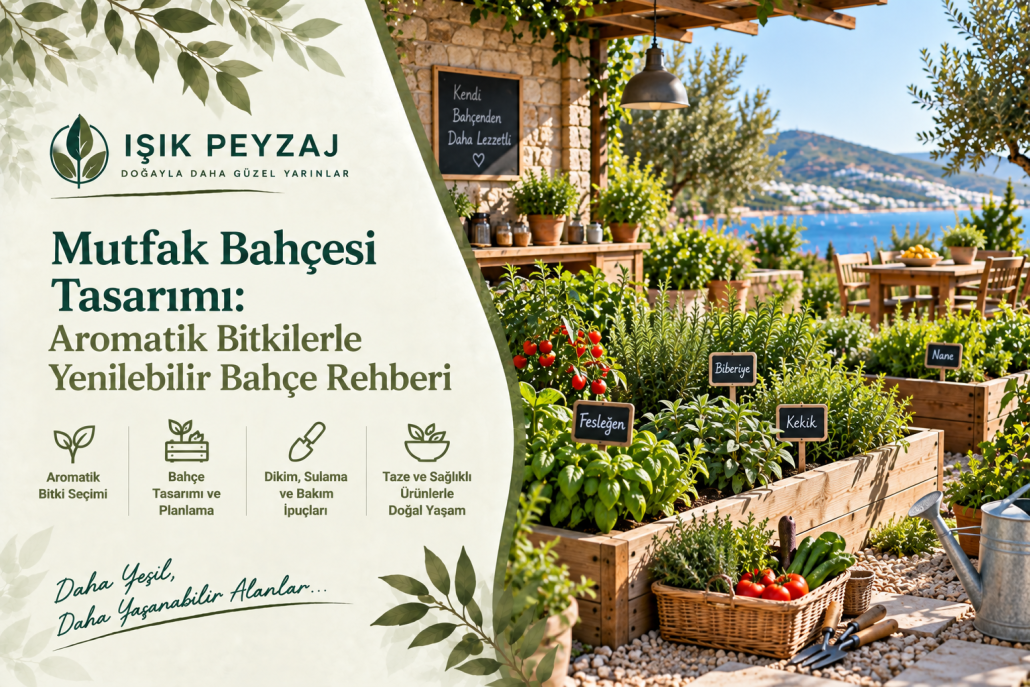
For anyone who wants to reach out and pick a fresh basil leaf while cooking or add a pinch of thyme to a soup, a kitchen garden is both practical and enjoyable. The aroma, freshness and nutritional value of herbs picked straight from the plant are incomparable to wilted supermarket bunches. Easy access to plants you grow yourself changes your cooking habits; you use more herbs and waste less.
In this guide we cover everything from what a kitchen garden is to location and design decisions, the most productive aromatic herbs, watering and harvesting. For those who want to create an edible landscape, we also show where professional softscape support comes in, for example in plant selection and soil preparation.
What Is a Kitchen Garden and Why Choose One?
A kitchen garden is a functional type of garden located close to the kitchen where the herbs, spices and vegetables used in everyday cooking are grown together. Known in English as a “herb garden”, it serves the table directly, unlike ornamental gardens. Also called a spice garden, this area has both visual and practical value.
The advantages are endless: fresh flavours, lower grocery costs, chemical-free produce and a stress-relieving hobby. As most aromatic herbs attract pollinators, they also contribute to your garden’s ecosystem. Significant yields are possible even in a small space.
Location and Design: Choosing the Right Spot
The success of a kitchen garden design depends largely on location. Most aromatic herbs are of Mediterranean origin and want plenty of sun, so an area that gets at least six hours of direct sun a day is ideal. Having the garden close to the kitchen also makes harvesting part of your daily routine.
Sun, Proximity and Access
As well as sun, choose a spot sheltered from wind where water does not collect. The edge of a terrace or below a window a few steps from the kitchen door is the most practical solution. Leaving a path between plants so you can move around easily makes care easier.
Raised Beds and Container Layouts
Raised beds work perfectly in gardens with poor or limited soil. They improve drainage, warm the soil earlier and let you work without bending. Pots and large containers offer portability; you can move plants according to the season. Containers of different heights also create a layered look.
Aromatic Herb Species: What to Grow?
Aromatic herbs are the heart of an edible landscape. To begin with, it is wisest to start with a few hardy, widely used species.
Basil
Heat- and sun-loving basil is essential for tomato dishes. The more regularly it is picked, the more it branches; if it is not allowed to flower, it keeps producing leaves for a long time.
Mint
Fast-growing, spreading mint should always be kept in a pot; otherwise it will take over the garden. It tolerates partial shade and likes plenty of water.
Thyme and Rosemary
Thyme and rosemary are drought-tolerant perennials. They need little water, largely overwinter outdoors and produce for years. Both add texture to the landscape with their ground-covering effect.
Parsley and Others
Species such as parsley, dill, cress and rocket grow quickly in the cool season. You can keep them fresh all year with successive sowings. For those looking for a ground-covering texture, our article on ground cover plants and their uses offers complementary ideas.
Vegetables and Edible Additions
A kitchen garden is not limited to herbs. Quick-to-harvest vegetables such as tomatoes, peppers, cucumbers, lettuce and radishes fit easily into the layout too. Using vertical supports for climbing beans or peas saves space and creates decorative vertical greenery.
Edible flowers add both visual appeal and flavour. Nasturtiums, marigolds and pansies brighten salads while keeping some pests away. This mixed layout creates an edible landscape that is both attractive and functional.
Soil and Water Management
A healthy kitchen garden starts with well-prepared soil. Most aromatic herbs like loose, well-drained soil rich in organic matter. Adding compost improves the nutrient balance; in heavy clay soils, a mix of sand and organic matter improves drainage.
Balance is key in watering. Species such as thyme and rosemary suffer from too much water, while mint and parsley want moisture. The most efficient way to manage these differences is a controlled system. Installing a drip irrigation system delivers water straight to the root zone, saving water and letting you adjust zones to each plant’s needs.
Harvest and Care
Regular harvesting keeps aromatic herbs lively and productive. Pick leaves early in the morning, when their aroma is strongest. Take care not to remove more than a third of the plant each time so that its growth is not interrupted.
Pinching out the tips of flowering herbs prolongs leaf production. Light pruning of perennials in spring rejuvenates the plant. Regularly removing dry leaves and weeds reduces disease risk and keeps the garden tidy.
Small Spaces and Balconies
For those without a garden, balconies, terraces and windowsills make excellent kitchen gardens. Vertical planting panels, hanging pots and window boxes offer surprising yields in small spaces. Containers on wheels make it easy to move plants during the day to follow the sun.
Design details become important for combining beauty and function in a limited space. For pot layouts integrated with a seating corner and timber elements, landscape furniture solutions make small spaces both productive and comfortable.
Common Mistakes in Kitchen Gardens
- Choosing the wrong spot: In a garden set up in a corner with little sun, herbs stay weak and their aroma fades.
- Overwatering: Giving too much water to drought-tolerant species such as thyme and rosemary leads to root rot and plant loss.
- Planting mint in the ground: Planting invasive mint directly in the ground soon lets it take over the space of other plants.
- Neglecting the harvest: Plants that are not picked regularly bolt, their leaves toughen and yields drop quickly.
Frequently Asked Questions
How much space does a kitchen garden need?
Even a few square metres is enough to start. It is possible to harvest herbs regularly even from pots on a balcony or windowsill; what matters is that the area gets plenty of sun.
Which aromatic herbs are suitable for beginners?
Basil, mint, parsley, thyme and rosemary are the easiest to care for. They give quick results, are hardy and, as they are used often in the kitchen, keep your motivation high.
Can I keep my kitchen garden going through winter?
Perennials such as thyme and rosemary can overwinter outdoors. Tender plants such as basil can be protected from the cold by potting them up and bringing them indoors or onto a windowsill.
What is the advantage of professional support?
An expert team saves time and money on soil analysis, choosing the right plants, irrigation infrastructure and overall design. Your garden is then productive and attractive from the first year.
Start your own herb garden with the right planning; you can draw on the Işık Peyzaj team’s experience at every stage you need.