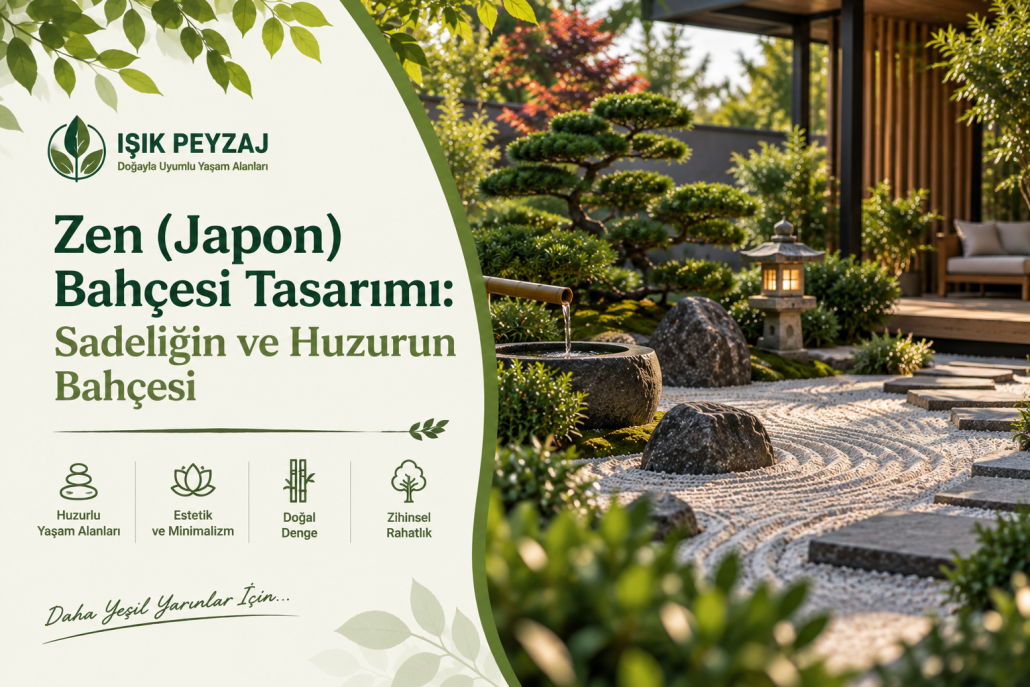
A Japanese garden is a design approach that distils nature to its essence rather than imitating it as it is. A well-made Japanese garden says a lot with few elements, bringing stone, water, moss and empty space into balance to give the viewer a sense of calm. At the heart of Zen garden design lie simplicity and serenity rather than show.
In this guide we cover the basic philosophy of the Japanese garden, the main elements of a Zen garden, design steps and how it can be applied in small spaces.
The Basic Philosophy of the Japanese Garden
At its origin, a Zen garden is a place for contemplation and rest. The design symbolically represents nature’s great landscapes in a small space. For example, gravel represents water and groups of stones represent mountains.
A few principles guide this approach:
- Simplicity: A small number of elements are carefully chosen and placed.
- Asymmetry: Natural balance is achieved not through symmetry but through a balanced irregularity.
- The value of emptiness: Unfilled areas let the design breathe.
- Naturalness: Materials are used as close to their natural state as possible rather than processed.
The Basic Elements of a Zen Garden
The elements of a Zen garden draw on a limited, complementary palette. Each element has both a functional and a symbolic meaning.
Stone and Gravel
Raked gravel surfaces represent the ripples of water, while large stones form fixed focal points. This arrangement is at the heart of the dry garden (karesansui) tradition.
Water and Water Features
A small pond, water collected in a stone basin or a simple fountain adds life and sound to the garden. Water is always used sparingly.
Plants and Moss
The plant palette in a Zen garden is narrow and supports a sense of serenity. Moss, ground covers and clipped shrubs come to the fore. Our article on ground cover plants and their uses is a good starting point for choosing the right ground cover.
Structural Elements
Stone lanterns, small timber bridges and bamboo fences are complementary elements that give the garden its cultural identity.
How to Design a Zen Garden
The answer to how to design a Japanese garden lies not in adding more elements but in creating the right relationships. Design begins by reading the boundaries and viewpoints of the space.
For a sound layout, follow these steps: first determine the main viewpoint, then place the stone groups in relation to it, then add the gravel and plant texture. The choice of surface and path materials also directly affects coherence; at this stage our guide to choosing natural stone paving helps with material decisions.
Japanese Gardens in Small Spaces
A Zen garden can be created in small corners as well as on large sites. A terrace edge, an inner courtyard or a small part of the garden can be turned into a simple dry garden. On a small scale, even a single stone group, raked gravel and a tuft of moss create a strong effect. What matters is not the size of the space but the balance between the elements.
Framing is also very important in small spaces. Enclosing the garden with a wall, fence or bamboo screen separates that small world from outside influences and makes it easier to focus. Even a few square metres can then become a calm corner away from the bustle of the day. Apartment balconies and inner courtyards can become peaceful Zen corners with this approach.
Colour, Texture and the Seasons in a Zen Garden
The serenity of a Zen garden comes from a limited colour palette. Different shades of green, the grey of stone and the natural colours of the earth together create a harmony that is easy on the eye. Rather than many vivid colours, the relationship between textures comes to the fore; smooth gravel, rough stone and soft moss come together in balance.
Seasonal change is also part of the design. A few carefully chosen plants such as maples provide a simple accent of colour in autumn, while bare branches in winter reveal the garden’s geometry. In this way a Zen garden looks different in every season but is always serene.
An Approach in Harmony with Nature
A Zen garden is a design approach that respects nature and can be sustained with minimal intervention. In this respect it shares the same philosophical roots as the rewilding landscape approach, which puts natural processes at the centre of design. Both see the garden not as an area to be controlled but as a whole to be lived in in harmony.
Frequently Asked Questions
Is a Japanese garden hard to maintain?
Dry garden elements need little maintenance, but raking the gravel and keeping moss moist require regular attention. Overall there is no heavy maintenance burden.
Which plants are used in a Zen garden?
Moss, ground covers, clipped shrubs and simply shaped plants such as maples are preferred. The aim is a limited palette that does not disturb the calm.
Can a Zen effect be created in a small garden?
Yes. With a single stone group, raked gravel and a few plants, a strong Zen atmosphere can be created even in small spaces.