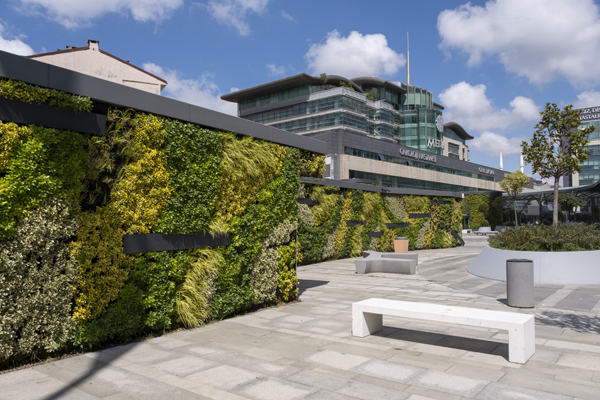
A vertical garden is a living plant system created by placing plants on vertical surfaces, on indoor or outdoor walls. Also called a green wall or living wall, it has become an essential element of both architectural projects and urban regeneration work in recent years.
In this guide we look at the technical fundamentals of vertical garden systems, installation types, plant selection and irrigation requirements, the maintenance programme and applications across different project types.
For detailed information about our green wall services, visit our service page.
Why Are Vertical Gardens Becoming So Popular?
There are several concrete reasons behind the rapid spread of vertical gardens.
Lack of space: In city centres there is not always enough room for ground-level landscaping. Vertical surfaces are the most effective way to overcome this.
Architectural identity: They make a strong visual impact on building façades, lobby walls and open spaces, creating a memorable design language that supports corporate identity.
Environmental benefits: Thermal insulation, better air quality, acoustic buffering and a reduced urban heat island effect — the environmental contributions of vertical gardens are measurable.
Demand for biophilic design: Design approaches that connect people with nature are increasingly in demand in corporate and commercial projects. The vertical garden is one of the strongest expressions of this approach.
Types of Vertical Garden
Vertical garden systems differ in their technical structure and uses. The right system depends on the scale of the project, the conditions of the space and the budget.
Modular Panel Systems
The most widely used vertical garden system. Substrate and plants are placed in modular plastic or metal panels mounted on the wall. Each panel can be replaced independently, which makes maintenance and repair easier.
Advantages: easy installation, a wide variety of plants, independent panel replacement and aesthetic flexibility.
Uses: hotel lobbies, shopping centre façades, corporate office entrances and outdoor walls.
Felt and Textile Systems
In this system, plants are set into layers of felt or textile, based on the approach developed by Patrick Blanc and now used worldwide. No soil is used; the plants’ roots attach directly to the felt layer.
Advantages: a very light structure (minimal load per square metre), dense planting on the wall and visual continuity.
Points to watch: the irrigation and feeding system is critical; any fault quickly damages the plants.
Pot and Frame Systems
A simpler approach in which individual pots hang on frame or rail systems mounted on the wall. It is preferred for small-scale projects and installations on a limited budget.
Advantages: low initial cost, easy installation, and maintenance and replacement pot by pot.
Limitations: it is hard to achieve visual continuity on large-scale projects.
Trellis and Climber Systems
Based on climbing plants growing up wire or tension systems mounted on the wall, this is the most natural form of vertical garden. It offers a surface that grows, changes and matures over time.
Advantages: low cost, a natural look and self-sustaining growth in the long term.
Disadvantages: it takes time to achieve a striking visual result; if not controlled, some species can damage the building façade.
To find the right type of system for your project, talk to our expert team.
Indoor and Outdoor Vertical Gardens: Different Requirements
Outdoor Installations
Building façades, open terrace walls, courtyard and garden walls are typical places for outdoor vertical gardens. Outdoors, the system must withstand the climate, rain and wind, temperature swings and ultraviolet radiation.
Plant choice depends on the local climate. Across Turkey’s climate zones — Mediterranean, Aegean and transitional climates such as Istanbul — the plant palette differs considerably. In Istanbul, species that tolerate winter frosts should be chosen.
For outdoor façade installations, our landscape metal and timber infrastructure solutions support the mounting of the system.
Indoor Installations
Office lobbies, hotel reception areas, restaurant and café walls and shopping centre interiors are the most common places for indoor vertical gardens. Indoors, natural light is usually insufficient, so grow light systems are often used.
Air circulation is critical in indoor systems. In poorly ventilated spaces, moisture build-up can harm both plants and the building. The irrigation system must be fully sealed against leaks.
You can find detailed information about our interior landscaping services.
Irrigation and Feeding: The Most Critical Component
In vertical gardens, the irrigation system is the most critical infrastructure component. In a conventional garden, roots spread through the soil and can draw moisture from different depths. In vertical systems, plants live in a limited volume of substrate, and any interruption to irrigation quickly causes serious damage.
Drip Irrigation Systems
The most common irrigation method for vertical gardens. Water trickles down from the top of the panels or felt layers. With fertigation built into the system, plants’ nutrient needs are met at the same time as watering.
Automatic Control and Monitoring
In large-scale systems, moisture sensors, timers and remote monitoring equipment have become standard. These systems save water and keep plant health under constant watch. Systems that send an instant alert when a fault occurs allow early intervention.
You can find out more about our automatic irrigation and infrastructure systems.
Maintenance: Managing a Vertical Garden Over the Long Term
A vertical garden needs its maintenance planned as carefully as its installation. A neglected vertical garden soon loses its visual appeal and ends up as a renewal cost.
Weekly check: is the irrigation system working, are there any leaks, are any plants damaged?
Monthly maintenance: controlling growth, trimming trailing stems, removing dead leaves and assessing nutrition.
Seasonal work: replacing plants (especially indoors as light conditions change), updating fertiliser doses and cleaning system filters.
Annual review: refreshing substrate, replacing damaged panels or felt, and a full check of the irrigation system.
A maintenance contract is the soundest solution for managing a vertical garden over the long term. To find out about our maintenance services, get in touch with us.
The Benefits of a Vertical Garden: A Corporate Perspective
Employee Productivity and Wellbeing
Research on vertical gardens in offices and corporate spaces shows that the presence of living plants reduces employee stress and increases concentration and productivity. Biophilic design is becoming an integral part of corporate office standards.
Air Quality
During photosynthesis, plants take in carbon dioxide and release oxygen, and they also absorb some volatile organic compounds. Indoors, planting of sufficient density makes a measurable contribution to air quality.
Acoustic Buffering
The substrate and plant layers of a vertical garden absorb sound. In buildings near heavy traffic or in open-plan offices, it can be considered a complementary solution for acoustic comfort.
Corporate Sustainability Goals
For organisations aiming for green certification or wanting to document their environmental contribution in ESG reporting, a vertical garden provides a measurable input.
Common Mistakes in Vertical Garden Installations
Underestimating the irrigation infrastructure. In most vertical garden projects, problems start with the irrigation system. Insufficient capacity, connections without leak protection or a system without automation are the most common sources of error.
Not checking the structural load capacity. Large-scale systems mounted on an existing wall can create a significant load. Installing without a structural assessment creates a structural risk.
Choosing the wrong plants. Putting outdoor plants indoors or sun-loving species on a north-facing wall is the most common cause of plant deaths.
Taking handover without a maintenance plan. Even if the installation is high quality, a vertical garden that is not maintained starts losing value within a few months.
Işık Peyzaj Vertical Garden Works
At Işık Peyzaj we manage the entire process for indoor and outdoor vertical garden projects, from system design and installation to plant selection, irrigation infrastructure and long-term maintenance. You can see the projects we have completed on our reference projects page.
For your vertical garden project, you can visit our green wall service page or request a meeting through our contact form.