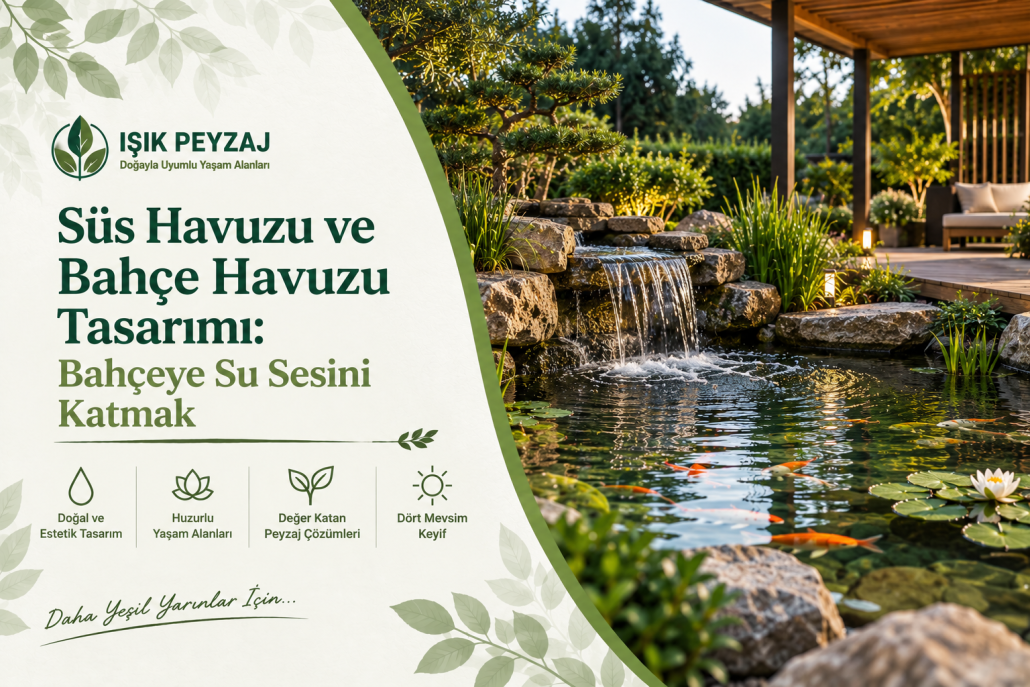
An ornamental pond is an element that doesn’t just beautify a garden but gives it soul. A well-designed ornamental pond soothes with the sound of water, cools its surroundings on hot days and gives the garden a lively focal point. Water features are therefore a powerful tool in landscape design for raising both aesthetics and quality of life.
In this guide we cover why ornamental ponds are chosen, the main types of pond and water feature, points to consider in design, materials and surroundings, and maintenance essentials.
Why Choose an Ornamental Pond?
Thanks to its many benefits, a garden pond finds a place in projects of every scale. The value water adds to a garden is not only visual.
- Calm and atmosphere: The sound of running water turns the outdoor space into a restful area.
- Microclimate effect: Water slightly humidifies and cools the surrounding air.
- Life: The area around the pond becomes an attraction for plants as well as butterflies and birds.
- Focal point: A well-positioned water feature ties together the garden’s design language.
Water features give the most natural and impressive result when planned together with the surrounding softscape, as the planting around the water blends the pond into the garden as a whole.
Types of Ornamental Pond and Garden Pool
Types of ornamental pond vary according to the scale of the garden and the desired atmosphere. The right type is chosen according to the character of the space.
Still Water (Mirror) Pools
A still water surface reflects the sky and surroundings, creating a calm, modern effect. Often chosen for minimalist gardens.
Waterfalls and Streams
A cascading flow of water offers both visual movement and a distinct sound. It can be applied naturally on sloping sites.
Natural (Biological) Ponds
An ecological approach in which plants help clean the water, minimising the use of chemicals.
Koi and Fish Ponds
Ponds with live fish need a deeper volume of water and regular filtration.
Points to Consider in Ornamental Pond Design
A successful water feature starts with proper planning before the first sketch. Location, size and infrastructure decisions are hard to change later.
The main criteria are:
- Location: The pond should not be built directly under trees that cast heavy shade or drop many leaves.
- Scale: The size of the pond should be in proportion with the garden as a whole.
- Water balance: Evaporation and overflow scenarios should be calculated from the start.
A long-lasting pond depends on correctly installed infrastructure. When waterproofing, pumps and electrical lines are handled professionally as part of landscape infrastructure works, the system runs safely and without problems.
Materials and Surroundings
The pond’s edging and surroundings determine the overall effect of the water feature. The stone used at the edge directly affects both appearance and durability; our guide to choosing natural stone paving helps with material decisions.
Aquatic plants, moisture-loving species and shade plants placed around the pond make the water feature more natural. Underwater and surrounding lighting to enhance the night-time effect should be planned in harmony with other landscape furniture.
Planting Around Water Features
What makes an ornamental pond look natural is the planting around it. Plants placed at the water’s edge soften the pond’s hard lines and integrate the water feature with the rest of the garden.
Three groups stand out in plant selection:
- Aquatic plants: Species such as water lilies partly cover the water surface, reducing algae and bringing the water to life.
- Marginal plants: Moisture-loving species create a natural transition between land and water at the pond’s edge.
- Surrounding plants: Shade-giving and evergreen species keep the pond surroundings lively all year.
A balanced plant palette both enhances the look and contributes to the ecological balance of the water. Once this balance is established, the pond surroundings become a micro-ecosystem that is easier to sustain.
Maintenance and Water Quality
Keeping an ornamental pond alive depends on regular maintenance. The filtration system keeps the water clear, while algae is prevented by regular checks. Choosing an energy-efficient pump lowers running costs and keeps the water circulating. In winter, the pump and equipment should be protected, and in autumn the surface kept clear of falling leaves. A regular maintenance routine keeps the pond looking as good as on day one for years.
Frequently Asked Questions
Can an ornamental pond be built in a small garden?
Yes. With compact mirror pools and wall-mounted water features, a striking water detail can be created even in small gardens.
Does an ornamental pond need a lot of maintenance?
With properly installed filtration and the right balance of plants, the maintenance burden is greatly reduced. Regular checks prevent major problems.
Does the pond water need to be changed regularly?
No. Good filtration and partial water changes when needed are enough for most ponds; draining all the water is rarely necessary.