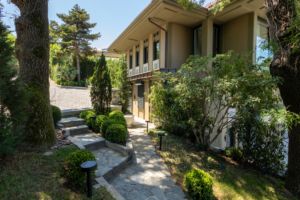
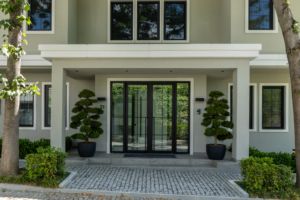
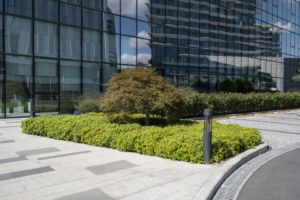
In design terms, a small garden is more challenging than a large one. Every square metre must be used carefully, no corner can be wasted and a sense of space must be created even in a tight area. Designed well, a small garden can become a far more striking and liveable space than a large one.
In this guide we look at how to make the most of the space in small gardens, design techniques that create a sense of openness, and choosing the right plants and materials. The principles apply to every limited space, from apartment gardens and terraces to narrow villa gardens and courtyards.
Basic Principles of Small Garden Design
In small spaces, the success of a design depends on a few basic principles. These make the space look larger than it is and make it more usable.
Think Vertically
A small garden’s greatest resource is not the ground but its vertical surfaces. Walls, fences and boundaries are all usable space for plants. Vertical garden panels, climbers and hanging planters add green volume without taking up ground.
Vertical garden systems are particularly effective in tight spaces. You can find detailed information about green wall installations.
Fewer, More Effective Plants
Using many different species in a small space creates visual clutter and makes the space look even smaller. A limited number of species, a repeated planting language and a clear colour palette make the space look orderly and larger. ’Less is more’ is the right approach in a small garden.
Multi-Functional Design
In a small garden, every element should do more than one job. A seating area can also provide storage, and a planted wall can give both privacy and beauty. A step can be both a transition and a place to sit. Single-purpose elements are a luxury in a small space.
Keep Continuity
Continuity in paving, plant choice and colour palette unifies a space and makes it feel larger. Using different materials in different areas breaks a small garden into pieces and makes it feel smaller. A single paving material visually unites the whole area.
Design Techniques That Make a Space Look Larger
Diagonal Layout
Laying paving and paths diagonally rather than parallel to the walls lets the eye follow the longest line and makes the space look larger. This simple technique creates a noticeable sense of space in small gardens.
Layered Planting
Arranging plants in layers, low at the front and tall at the back, creates a sense of depth. When the eye perceives more than one layer, the space looks deeper than it is.
Light Colours and Mirrors
Light-coloured walls, paving and garden furniture reflect light and open up the space. Strategically placed mirrored surfaces are also an effective way to create an illusion of depth in small gardens.
Hidden Corners and a Sense of Discovery
Rather than making a small garden fully visible at a glance, hiding a corner behind plants or curving part of the path creates a feeling that ’there’s more’. This makes the space feel larger than it is.
Choosing the Right Plants for a Small Garden
Compact, Slow-Growing Species
In a small garden, fast-growing, large species soon overwhelm the space. Compact species with controlled growth should be chosen. Dwarf shrubs, compact ground covers and species that can be shaped stay manageable in small spaces.
Upright Species
Species that grow tall rather than wide save ground in a small garden. Slender, upright plants — cypress species, for example — create vertical emphasis in a narrow space without taking up much ground.
Interest Across the Seasons
In a small garden, every plant should earn its place for a long time. Instead of species that flower for one season and look dull for the rest of the year, choose ones that offer foliage, form or colour all year round.
For advice on choosing plants suited to your region and space, you can consult our softscape services.
Hardscape and Choosing Materials
In a small garden, the paving material directly affects how the space is perceived. Large-format paving — large stone or ceramic slabs — creates fewer joint lines and makes the space look larger. Small, multi-piece paving makes the space look busier and narrower.
To choose the right paving material, see our hardscape services and our guide to natural stone paving.
Water Features and Lighting
Small-Scale Water Features
Even in a small garden, water can bring a powerful atmosphere. A wall fountain, a small pond or a minimal water curtain increases the sense of space and its sound is calming. A water feature doesn’t have to be large; positioned correctly, it is effective on a small scale too.
Find out about our water feature services.
Making the Space Feel Larger with Lighting
The right lighting completely transforms a small garden at night. Uplights on walls and plants create depth, and wayfinding lights open up the space. A well-designed lighting plan turns a small garden into a space that can be used in the evening too.
You can enhance your small garden’s night-time atmosphere with our landscape lighting solutions.
Types of Small Garden and Solutions
Apartment and Roof Terraces
Limited ground and load limits are the main challenges here. Lightweight planter systems, vertical garden panels and compact plant choices stand out. On roof terraces, the structural load capacity must always be assessed.
Courtyards
For courtyards, which are usually shady and enclosed by four walls, shade-tolerant species and vertical green surfaces are ideal. Light-coloured walls and good lighting make up for the limited daylight in these spaces.
Narrow Villa Gardens
In long, narrow gardens, dividing the space into zones — seating, green, circulation — makes it look larger and more functional. Diagonal layouts and layered planting are especially effective in this type of garden.
Common Mistakes in Small Garden Design
Filling the space with plants. In a small garden, empty space means openness. Filling every corner overwhelms the space.
Using too many different materials. A variety of materials on the ground, walls and furniture breaks up and narrows a small space.
Choosing species that become huge. A sapling that looks small today can cover the entire space within a few years. Always consider a species’ mature size.
Ignoring vertical space. Walls and vertical surfaces are a small garden’s most valuable resource; leaving them bare wastes space.
Small Garden Design with Işık Peyzaj
At Işık Peyzaj we apply the same design discipline to small gardens as to large projects. By planning vertical gardens, hardscape, water features and lighting as efficiently as possible in limited spaces, we turn small gardens into liveable, striking places.
If you would like ideas for your garden or to discuss a project, you can explore all our services or reach us through our contact form.