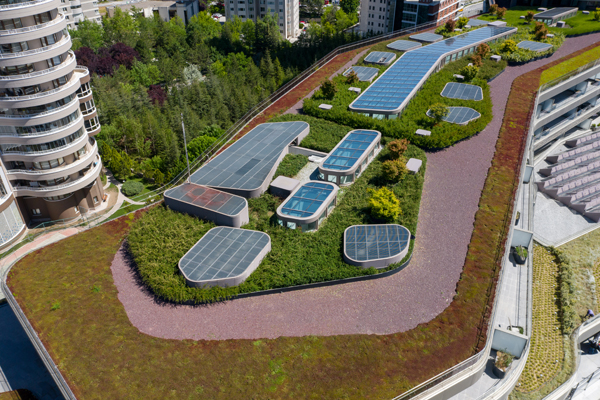
A green roof is a system that turns the roof surface of a building into a living ecosystem by covering it with vegetation and special substrate layers. This practice, which has spread rapidly in Turkey over the last decade, offers wide-ranging benefits such as energy efficiency, rainwater management, reduction of the urban heat island effect and aesthetic value.
In this guide we cover the technical fundamentals of green roof systems, the types of installation, the structural requirements to consider and the long-term maintenance needs. It has been prepared as a practical reference for architects, contractors and property owners.
For detailed information about our green roof services, visit our service page.
What Is a Green Roof? Key Concepts
At its simplest, a green roof is a living surface built on a roof. But this definition hides the system’s complexity. A successful green roof is a layered system in which several engineering and landscape disciplines work together.
The main layers of a green roof system are: the waterproofing membrane, the root barrier, the drainage and aeration layer, the filter geotextile, the substrate (growing medium) and, on top, the vegetation. If any of these layers is not installed with the right material and thickness, the whole system can be put at risk.
Types of Green Roof
Green roofs fall into three main categories according to intensity of use, substrate depth and plant palette. The right category depends on the building’s load capacity, the budget and the intended use.
Extensive (Lightweight) Green Roof
The most common and most economical type of system. Substrate depth ranges from 6 to 15 centimetres, and the total load added to the roof stays between 60 and 150 kilograms per square metre. This low load means the system can be installed on most existing buildings.
The vegetation usually consists of sedum species, mosses and drought-tolerant herbaceous plants. Root depth is shallow and maintenance needs are minimal. No roof access is needed; the system largely looks after itself.
Uses: industrial buildings, residential roofs and large commercial buildings. Ideal for roofs that are inaccessible or that maintenance crews cannot reach regularly.
Semi-Intensive Green Roof
Sitting between extensive and intensive systems, this category offers a wider plant palette with a substrate depth of 15 to 30 centimetres. The load is between 120 and 250 kilograms per square metre.
Lawn, ground covers, small shrubs and some flowering plants can be used in this system. It needs occasional maintenance but can be managed without easy access.
Uses: medium-sized commercial buildings, hotel roofs and mixed-use buildings.
Intensive Green Roof
Offering a true roof garden, this system can host all kinds of plants, including trees, with a substrate depth of more than 30 centimetres. The load per square metre starts at 300 kilograms and can exceed 1,000 kilograms.
This system has the highest structural requirements, the most extensive irrigation infrastructure and the most intensive maintenance programme. In return, it offers the highest aesthetic and functional value.
Uses: luxury residential and hotel projects, shopping centre roof terraces, corporate terrace gardens and prestigious projects where landscape architecture takes centre stage.
To choose the right green roof system for your project, you can request a meeting with our expert team.
Structural Requirements: Questions to Answer Before Design
The most critical and most often skipped step in a green roof project is the preliminary structural assessment. The building’s current condition must be fully analysed before a system is chosen.
Load Capacity Analysis
If a green roof is planned for an existing building, the structure must be examined first. All loads, including substrate, irrigation water, plant mass and snow load, are calculated and compared with the existing load capacity.
If the load capacity is insufficient, strengthening is mandatory. Starting the system without this assessment endangers the building’s safety and can cause damage that is hard to fix later. In new buildings, the green roof load should be included in the design from the project stage.
Waterproofing Assessment
A green roof system is constantly moist. The condition of the existing roof waterproofing must be checked and renewed or reinforced if inadequate. The root barrier membrane laid over the waterproofing stops plant roots damaging it — this layer is a requirement that must not be skipped.
Drainage Design
Standing water on a green roof harms both the plants and the building. An effective drainage system must remove excess water quickly while retaining the moisture plants need. The drainage layer should be designed specifically for the substrate type and green roof system.
You can find out about drainage system design and installation as part of our landscape infrastructure services.
Choosing Substrate: Not Soil, but a System
Garden soil is not used on green roofs. Standard garden soil is too heavy when wet, compacts over time and blocks drainage. Green roof systems use lightweight substrate mixes formulated specifically for them.
These substrates usually contain pumice, perlite, expanded clay granules and a small amount of organic matter. Although light, they provide the balance of nutrients and moisture plants need to root. The substrate is chosen according to the type of green roof and the plant palette.
Substrate quality directly affects plant health. Using low-quality substrate may look like a saving in the short term, but plant losses and system problems turn it into a much higher cost in the long run.
Plant Selection: What Grows on a Green Roof?
Plant choice depends on the type of green roof, the climate and the desired visual effect. But there are some basic criteria that apply to all species: a light root system, tolerance of drought and wind, and low maintenance needs.
For Extensive Systems
Sedum species (Sedum acre, Sedum album, Sedum reflexum and others) are the standard vegetation for extensive green roofs. They are extremely drought-tolerant, make do with little substrate thanks to their shallow roots, and different sedum species offer a variety of colour throughout the year. Mosses and some herbaceous species are also used in these systems.
For Semi-Intensive and Intensive Systems
Lawn, various ground covers, aromatic plants such as lavender and rosemary, small shrubs and, in intensive systems, medium-sized trees can be used. The roof’s sun exposure, wind load and maintenance programme are decisive in choosing plants.
In coastal and windy areas, salt- and wind-tolerant species should be chosen. In cities with four distinct seasons, such as Istanbul, choosing species that tolerate winter frosts is critical for long-term plant health.
The Irrigation System: A Green Roof’s Nervous System
On extensive green roofs with the right plants, irrigation can mostly be met by rainfall. But given the summer drought across much of Turkey, a backup irrigation system is recommended, particularly during the establishment period after installation.
In semi-intensive and intensive systems, automatic drip or sprinkler irrigation is essential. The irrigation system should be integrated into the green roof’s layers, controlled by moisture sensors and monitored remotely.
For automatic irrigation system design and installation, you can make use of our infrastructure services.
The Benefits of a Green Roof: Technical Data
Energy Efficiency
A green roof can lower indoor temperatures by 3 to 7 degrees in summer. This effect increases with substrate depth and vegetation density. The reduction in cooling load delivers measurable savings in annual energy costs in large commercial buildings.
Rainwater Management
Green roofs can retain 50 to 90 percent of rainwater. The proportion varies with rainfall intensity, substrate depth and the system’s moisture level. Reducing sudden loads on municipal infrastructure matters especially in dense urban areas.
Reducing the Urban Heat Island Effect
In city centres, concrete and asphalt surfaces absorb the sun’s heat and raise urban temperatures by 2 to 5 degrees compared with surrounding areas. Green roof and green wall installations significantly reduce this effect at building scale.
Extending Building Life
A green roof protects the waterproofing layer beneath it from ultraviolet radiation, temperature fluctuations and mechanical damage. This protection can extend the life of the waterproofing two to three times.
LEED and BREEAM Certification
In green building certification systems, green roofs earn credits in many categories: water management, energy efficiency, urban heat island reduction and biodiversity. For projects aiming for LEED or BREEAM, a green roof becomes a strategic choice.
Maintenance: Does a Green Roof Look After Itself?
The answer depends on the type of green roof.
Extensive systems need minimal maintenance when installed correctly. An inspection once or twice a year, removing any weeds and checking for damage are enough.
Semi-intensive systems need maintenance visits three to four times a year, seasonal fertilising and irrigation system checks.
Intensive systems need maintenance as intensive as a normal garden: pruning, fertilising, pest control and irrigation system upkeep.
The consequences of neglecting maintenance can be hard to reverse: plant deaths, substrate breakdown and damage to the waterproofing. Green roof projects handed over without a maintenance agreement run into serious problems over time.
Green Roof Cost: What Affects It?
The cost of a green roof varies widely depending on the system, scale and current condition of the building. The main cost drivers are:
System type: extensive systems have the lowest cost per square metre; intensive systems the highest.
Substrate depth and quality: deeper, higher-quality substrate means a higher cost.
Condition of the existing roof: the cost rises if the waterproofing needs renewing or the structure needs strengthening.
Irrigation system: automatic irrigation is an extra cost, but an essential long-term investment.
Project scale: the unit cost falls on large-scale projects.
For a cost assessment tailored to your project, you can request a site visit. After the site analysis, we provide a transparent, detailed quote.
Işık Peyzaj Green Roof Works
At Işık Peyzaj we manage the entire green roof process under one roof, from the preliminary structural assessment and choice of system to substrate supply, planting, irrigation installation and long-term maintenance. You can see the projects we have completed with our ISO 9001 certified quality management system and experienced team on our references page.
For your green roof projects, you can visit our service page or request a meeting with our expert team through our contact form.