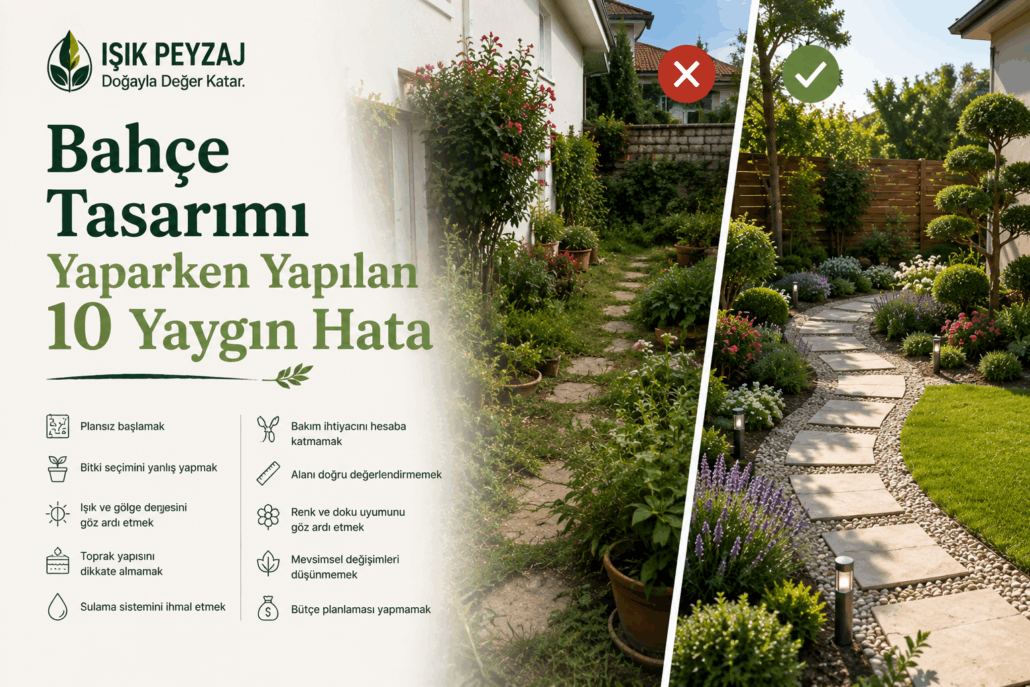
A well-planned garden does more than look good; it creates a living space in harmony with nature that improves quality of life and can be enjoyed for many years. However, some mistakes made during garden design can lead to high costs and problems of use that emerge over time.
Garden design, in which many details from plant selection to irrigation planning and from paving to lighting must be considered together, requires professional planning. Wrong decisions made during installation in particular can create the need for redesign in later years.
In this article we look in detail at the most common mistakes in garden landscaping and how to avoid them.
1. Choosing Plants Unsuited to the Climate
One of the biggest mistakes in garden design is choosing plants based solely on looks.
Each plant needs different climatic conditions. Choices made without considering the region’s temperatures, hours of sun, wind and soil structure can cause plants to lose their health quickly.
Plants suited to the climate should therefore be chosen and a long-term growth plan created.
2. Not Allowing for Plants’ Mature Size
Newly planted plants may look small but can grow considerably over the years.
Due to inadequate planning:
- Trees may get too close to buildings.
- Roots may damage infrastructure.
- Plants may hinder each other’s growth.
- Paths may become narrower.
When planting, consider not only the plant’s current size but also the size it will reach in future.
3. Thinking About Irrigation as an Afterthought
In many garden projects, irrigation infrastructure is planned after planting is complete.
This creates extra cost and can disturb the existing landscape.
Professional automatic irrigation systems should be designed together with the landscape works, and infrastructure work completed before planting.
4. Focusing Only on Looks
Of course it matters that a garden looks beautiful. But ease of use should be considered just as much.
If functional areas such as seating, paths, vehicle access and children’s play areas are not planned properly, the garden can become impractical for daily use.
A successful garden design should offer aesthetics and functionality together.
5. Neglecting Drainage
Water collecting in the garden during wet periods can damage both plants and hard surfaces.
Inadequate drainage can cause:
- Mud,
- Root rot,
- Ground deterioration,
- Structural problems.
Drainage planning should therefore be considered at the earliest stages of landscape works.
6. Using Too Many Plants
Using many different plants in a garden does not always create a more attractive look.
On the contrary:
- It can create visual clutter.
- Maintenance costs can rise.
- Plants may hinder each other’s growth.
- The garden can lose its coherence.
Simpler but well-balanced planting gives far better results in the long run.
7. Poor Lighting Planning
Garden lighting is often one of the details thought of at the end of a project, yet it is among the most important elements of successful garden design.
Inadequate or badly positioned lighting can:
- Diminish the garden’s appearance.
- Cause safety problems on paths.
- Reduce the night-time visibility of plants and architectural details.
Different lighting solutions should be planned for paths, seating areas, steps and focal plants to ensure both safety and visual coherence.
8. Failing to Balance Hard Surfaces and Green Space
In garden design, going only for large lawns or entirely hard surfaces is not the right approach.
In a successful project:
- Planted areas,
- Paths,
- Seating areas,
- Decorative stone features,
- Lawns
should be planned in balance with each other.
When this balance is achieved, the garden becomes both more practical and more attractive.
9. Not Creating a Regular Maintenance Plan
Neglecting maintenance once the garden has been installed can, over time, undo the entire landscape layout.
To keep plants growing healthily:
- Prune regularly.
- Adjust the irrigation schedule to the season.
- Apply fertiliser at set times of the year.
- Check regularly for pests and diseases.
- Replace dead plants promptly.
Gardens that are maintained regularly last longer and keep the look they had on the first day.
10. Building Without Professional Support
One of the most important mistakes in garden design is starting construction without professional planning.
Every garden differs in its:
- Terrain,
- Hours of sunlight,
- Soil properties,
- Plant requirements,
- Irrigation infrastructure,
- Intended use
— no two are the same.
That is why projects planned for the specific site give far better results than off-the-shelf solutions. Landscape projects prepared by expert teams keep costs under control and create living spaces that can be used without problems for many years.
Tips for a Successful Garden Design
To create a long-lasting and attractive garden, consider the following tips:
- Choose plant species suited to the climate.
- Plan the irrigation infrastructure before construction.
- Take the growth potential of plants into account.
- Keep a balance between hard surfaces and green areas.
- Use the right lighting solutions.
- Set up a regular maintenance programme.
- Plan around how the space will be used.
- Get professional landscaping support.
With these basic principles, your garden will keep its value, both aesthetically and functionally, for many years.
Conclusion
A successful garden design should be shaped not only by aesthetics but by considering climate, plant selection, infrastructure planning and use together. Small mistakes made at the design stage can lead to high maintenance costs and usability problems in later years.
With well-planned planting, balanced hardscape works, effective automatic irrigation systems and regular maintenance, it is possible to create outdoor spaces that are both visually striking and long-lasting. Landscape projects prepared with a professional approach add value to living spaces and give their users functional, sustainable gardens to enjoy in every season.