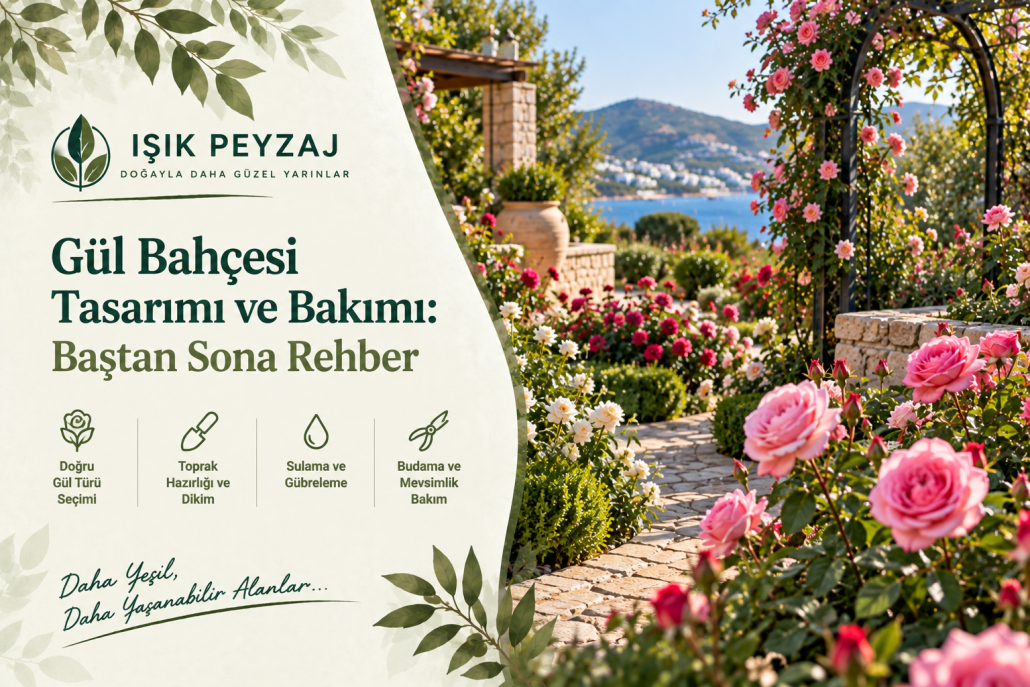
The rose is one of the strongest elements in defining a garden’s character. A well-planned rose garden offers not only a feast of colour but recreates the atmosphere of a space with the unique fragrance that fills the air in the morning. With its velvety petals, layered flower forms and repeat flowering through the season, the rose is an essential player in both classic and modern landscapes. Done right, even a small corner becomes a place to relax and enjoy.
In this article we cover every aspect of the subject, from why a rose garden is valuable to choosing species, location and soil preparation, planting, regular care and ways of using roses in design. If you want to plan plant selection and soil preparation as a whole, our softscape service forms the basis of the process.
Why a Rose Garden Is Valuable
Roses add three values to a garden at once: beauty, fragrance and continuity. Many varieties flower repeatedly from spring to autumn, keeping the garden lively for a long season. The wide range of colours is also a great advantage; from white to burgundy, peach to soft pink, there is a rose for every design palette. Roses also support the garden ecosystem by attracting beneficial creatures such as bees and butterflies. Being long-lived, they let the planting gain value over the years.
Rose Types and Choosing the Right One
The success of a rose garden depends largely on choosing the right types of rose. Each type offers a different function and form; the choice should be made according to the size of the area and the design aim.
Shrub Roses
Ideal for those wanting a dense, lush look. Often chosen for borders, mass planting and natural garden layouts. Relatively easy to care for, their branching habit gives a full texture.
Climbing Roses
The most elegant way to make use of vertical surfaces. Climbing roses trained over pergolas, arches, arbours and walls add height and a romantic air to the garden. They need to be tied to a support as they grow, so their location should be planned from the start.
Miniature Roses
Made for small spaces, pots and border edges. Their compact habit means they can be used easily in terrace and balcony gardens, making a big impact on a small scale with abundant flowers.
Standard Roses
Shaped on a single stem, this form gives a design a focal point. It stands out as an accent in symmetrical layouts, along entrance axes or at the centre of a flower bed.
Location and Soil: A Healthy Start
Roses love sun. A position with at least six hours of direct sun a day is a prerequisite for abundant, healthy flowering. Insufficient light means sparse flowers and a weak plant open to disease. In the soil, drainage is the most critical factor; roots don’t like standing in water for long. Heavy clay soils should be opened up with organic matter, well-rotted manure and coarse material, and raised beds created if necessary. A slightly acidic, nutrient-rich soil is the best environment for roses to root. For planning with ground covers, our article on ground cover plants and their uses helps complete the base layer.
Planting Roses Step by Step
Correct rose planting directly affects the plant’s lifespan and performance. The best time is late autumn and early spring, when the plant is dormant. Dig a hole wide enough for the roots to spread easily and place mature compost at the bottom. Position the plant so that the graft union sits just above soil level. Spacing should be adjusted to the spread of the variety; avoid planting so densely that air circulation is blocked. After planting, water generously to bring the soil into contact with the roots.
Rose Care: Steps to Follow All Year
After a solid start, what determines the garden’s continuity is regular rose care. Care falls under four main headings.
Watering
Roses like deep but infrequent watering. Rather than frequent shallow watering, it is healthier to wet the soil down to root depth. Watering the root zone rather than the leaves reduces the risk of fungal disease. Installing a drip irrigation system to deliver water evenly to the root zone is effective for both water saving and plant health.
Feeding
Roses are hungry plants. Balanced feeding as growth starts in spring and during flowering increases colour intensity and the number of flowers. Towards the end of the season, nitrogen is reduced to prepare the plant for winter.
Pruning
Regular rose pruning both maintains the shape and encourages flowering. In the main pruning at the end of winter, as dormancy ends, dead, damaged and inward-growing stems are removed. Deadheading throughout the season speeds up the formation of new buds.
Managing Pests and Diseases
Fungal problems such as powdery mildew, black spot and rust, and pests such as aphids, are the main threats to roses. Good air circulation, balanced watering and early intervention are the key to solving problems before they grow. Affected leaves should be collected and removed.
Using Roses in Design
There are many ways to bring roses into a design. Used as a border, they create a colourful frame along paths and lawns. On pergolas and arches, climbing roses create a vertical accent, covering seating areas to offer shade and fragrance. A standard rose positioned on its own at the centre of a bed acts as a focal point. Contrast with hard surfaces brings out the vibrancy of roses even more, so our guide to choosing natural stone paving is useful for creating a base that complements flower areas.
When Is Professional Support Needed?
When species selection, soil preparation, irrigation infrastructure and a seasonal care plan are considered together, creating a rose garden requires technical knowledge. A holistic approach, from sun analysis and drainage to the flowering calendar and pruning programme, ensures a long-lasting garden. For seating and decorative needs after installation, the design is completed with landscape furniture solutions.
Common Mistakes in Rose Gardens
- Too little sun: Roses planted in a shady corner flower sparsely and remain open to disease.
- Frequent, shallow watering: Watering the leaves and drowning the roots invite fungal problems.
- Neglecting pruning: Dead wood left in place spoils the shape and reduces flowering.
- Planting too densely: Cutting off air flow between plants lets diseases spread quickly.
Frequently Asked Questions
What is the best season to create a rose garden?
The ideal time for planting roses is late autumn to early spring, when the plant is dormant. Roses planted then have enough time to root and make a stronger start in their first season.
How often should roses be watered?
Deep but infrequent watering is best. Wet the soil to root depth, then let the surface partly dry. Increase frequency in hot summer months, but always water the root zone.
Where are climbing roses used?
Climbing roses are used on pergolas, arches, arbours, walls and fences to make use of vertical surfaces. Trained on a support, they add height, shade and a romantic look to the garden.
How are roses protected in winter?
Nitrogen is reduced before winter and the plant prepared for dormancy. In cold regions, the root zone is insulated with mulch or mounded soil. The main pruning is done at the end of winter, once the danger of frost has passed.