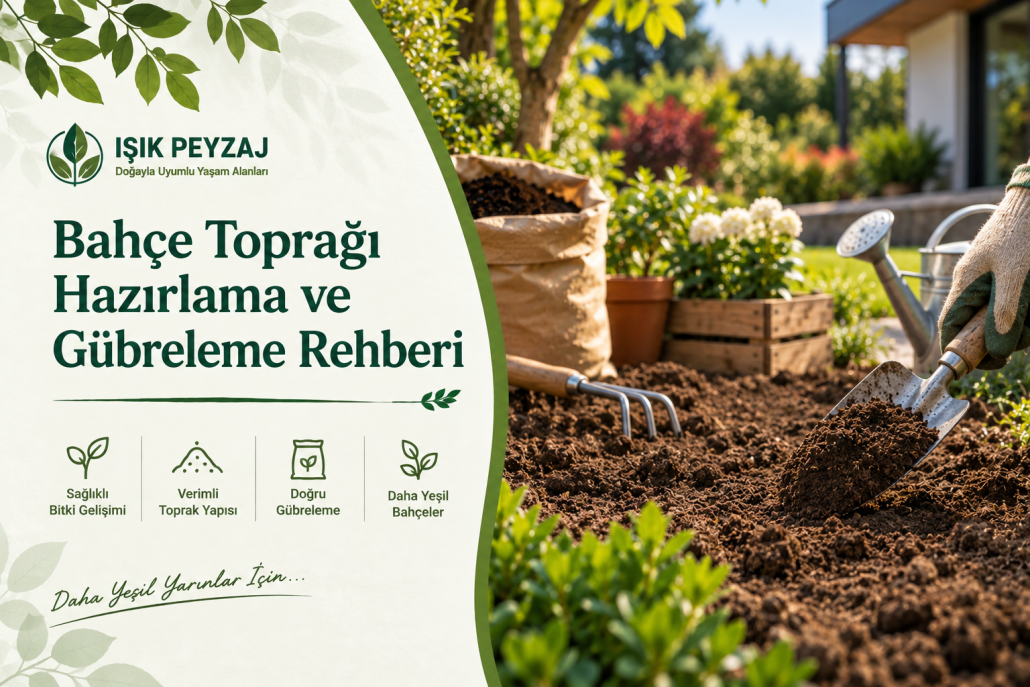
Soil is the invisible foundation of a healthy garden; plants, lawns and trees draw their greenery from conditions in the root zone. Garden soil preparation means adjusting the soil’s structure, nutrient balance and water-holding capacity to the needs of plants before planting. If the soil is not prepared properly, even the best plants grow poorly, become prone to disease and fail to perform. That is why the first and most decisive step in landscape work is not the visible plants but the soil layer underfoot.
In this guide we cover in turn why soil matters, soil types, analysis and pH measurement, aeration and adding organic matter, types of fertiliser and pre-planting steps. For a comprehensive view, it is worth remembering that the softscape process also begins with soil preparation.
Why Soil Matters for the Garden
Soil does not just provide physical support for plants; it is a living medium that delivers water, air and nutrients to the roots. The earthworms, microorganisms and fungi in it break down organic matter into a form plants can absorb. If this biological activity is weak, even applied fertiliser cannot be fully used. A good garden therefore starts with living, balanced soil.
Soil Types
Not every garden has the same soil, and proper preparation begins with knowing your soil type. Even a simple test of squeezing soil in your hand gives an idea of its structure.
Clay Soil
Clay soil is fine-grained and heavy. It holds water well but is poorly aerated; it is sticky when wet and hard when dry. It needs loosening with sand and organic matter to prevent root rot.
Sandy Soil
Sandy soil is coarse-grained and well aerated but loses water and nutrients quickly. In this structure, compost and organic fertiliser are important for increasing water-holding capacity.
Loam
Loam, which balances sand, clay and silt, is the ideal medium for most plants. It both holds water and drains. The aim is usually to improve other soil types to bring them closer to this balance.
Soil Analysis and pH
The most reliable way to know your soil is analysis. A laboratory analysis shows the levels of nutrients such as nitrogen, phosphorus and potassium and the organic matter content. Fertilising is then based on data rather than guesswork.
The most critical of these measurements is soil pH. pH expresses the acidity or alkalinity of the soil and directly affects how available nutrients are to plants. Most garden plants prefer slightly acidic to neutral soils in the 6.0-7.0 range. If the value is too low, lime is added; if too high, sulphur or organic matter is added to restore balance. Fertilising when the pH is unsuitable is often wasted, as nutrients stay locked in the soil.
Aerating and Loosening the Soil
Compacted soil blocks root growth and drainage. Loosening the soil by digging or hoeing before planting increases air spaces and makes root development easier. On large areas this is done by machine, in small gardens with hand tools. Aeration should be repeated regularly, especially on lawns, so that water and fertiliser reach the root zone. Take care that the soil is not too wet during the work, or its structure will be damaged and clodding will increase.
Organic Matter and Compost
The most effective way to improve soil is to add organic matter. Compost, well-rotted manure and plant residues improve soil structure, increase water-holding capacity and feed microbial activity. Acting as a binder in sandy soil and a loosener in clay, it brings both extremes closer to the ideal balance. Compost also releases nutrients slowly, feeding the plant over a long period. Mixing it well into the topsoil before planting makes a lasting difference to performance.
Types of Fertiliser
Fertiliser makes up for nutrients missing from the soil, but the type and dose must be chosen correctly. Careless garden fertilising can do more harm than good.
Organic Fertiliser
Organic fertiliser comes from natural sources such as compost, worm castings and well-rotted manure. It releases nutrients slowly, improves soil structure and supports microbial life. Its effect takes longer to show but is lasting and does not exhaust the soil.
Chemical Fertiliser
Chemical fertilisers contain specific nutrients in high, measured amounts and act quickly. They are useful for targeting a deficient element identified by analysis. However, overuse can salinise the soil and reduce organic life. The healthiest approach is to rely on an organic base and use chemical fertiliser only as needed to balance it.
Pre-Planting Preparation Steps
Preparing soil properly involves a few successive steps. The following sequence provides a sound roadmap for most gardens:
First, weeds, stones and roots are cleared from the area. The soil is then dug over to loosen and aerate it. pH is corrected according to the analysis; lime or sulphur is added at this stage. Compost and organic fertiliser are then mixed into the topsoil. Finally, the soil is levelled and made ready for planting. Which plant goes where should also be planned at this stage; for example, ground cover plants may need different soil conditions. Similarly, if you are creating a lawn, your choice of roll-out turf or seed also affects soil preparation.
Seasonal Care and Professional Support
Soil preparation is not a one-off job. Spring suits preparation for planting, while autumn suits resting the soil and adding organic matter. Soil moisture, compaction and nutrient status should be monitored regularly through the year. For problem soils, professional analysis and treatment save both time and money. Expert support determines the right fertiliser dose and prevents losses from trial and error.
Common Mistakes in Soil Preparation
- Fertilising without analysis: Fertiliser applied without knowing what the soil really needs is often wasted and upsets the balance.
- Ignoring pH: The wrong pH causes nutrients to stay locked in the soil and never reach the plant.
- Working wet soil: Digging very wet soil damages its structure and increases clodding and compaction.
- Neglecting organic matter: Relying only on chemical fertiliser exhausts the soil over time and reduces its vitality.
Frequently Asked Questions
What is the best season for preparing garden soil?
Spring is ideal for preparing for planting; autumn is suited to adding organic matter and resting the soil. In both seasons, make sure the soil is not too wet.
Can I measure soil pH myself?
Yes, home pH test kits or digital meters give an approximate result. However, a laboratory test that also covers nutrients is more reliable for fertilising decisions.
Is organic or chemical fertiliser better?
Organic fertiliser improves soil structure and releases nutrients slowly; chemical fertiliser has a fast, targeted effect. The healthiest result comes from relying on an organic base and balancing with chemical fertiliser only as needed.
How often should I fertilise the soil?
It depends on the plant type and the soil’s nutrient status. Adding organic fertiliser once or twice a year is usually enough; a soil analysis helps determine the exact dose.
Preparing your soil correctly is the first step to a healthy garden. If you are unsure about the condition of your soil, contact the Işık Peyzaj team for a professional assessment.