
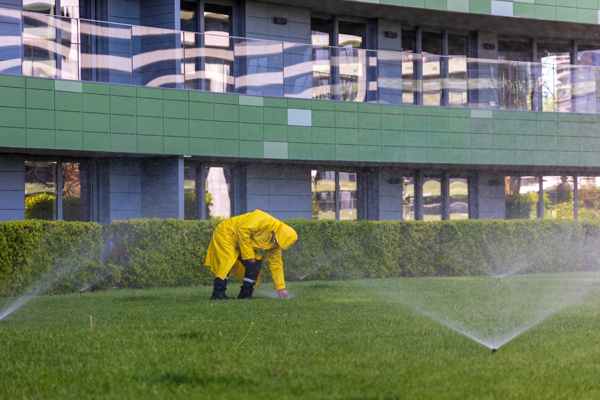
Irrigation is the most critical yet most neglected component of a landscape project. Even the best design, the finest plants and the most careful installation can be damaged within a few seasons by a badly planned irrigation system. The right irrigation system, on the other hand, keeps plants healthy, cuts water use significantly and keeps the maintenance burden to a minimum.
In this guide we look at the types of garden irrigation systems, the stages of installing automatic irrigation, the factors that affect system choice and the technical details of good irrigation planning. The information applies at every scale, from home gardens to large commercial projects.
For detailed information on our landscape infrastructure and irrigation services, visit our service page.
Why an Automatic Irrigation System?
Manual watering may be possible in a small garden, but it has many disadvantages. Automatic irrigation systems eliminate them.
Water savings: a well-designed automatic system delivers the right amount of water directly to the root zone. This saves a significant amount of water compared with surface watering.
Consistency: plants are watered regularly and evenly. The over- and under-watering that is unavoidable with manual watering disappears.
Saving time and effort: the system runs automatically on a timer. This is a critical advantage, especially in large gardens and properties where the owner is not always present.
Plant health: regular water at the root zone encourages deep rooting and healthy growth.
Types of Irrigation System
Garden irrigation systems differ by method and plant type. Most projects use more than one system together.
Drip Irrigation System
The most efficient irrigation method, delivering water slowly and directly to the root zone, drop by drop. Losses to evaporation and runoff are minimal.
Advantages: the highest water efficiency, targeted watering at the root zone, fewer weeds (water goes only to the plant) and lower risk of leaf disease (leaves stay dry).
Uses: groups of trees and shrubs, flower beds, vegetable gardens, vertical gardens, container plants and drought-sensitive species.
Drip irrigation is the standard choice in regions where water is scarce and in dry climates.
Sprinkler System
A system that sprays water over a wide area like rain. It is ideal for large, uniform surfaces.
Advantages: fast, even watering of large areas, ideal for lawns, little intervention after installation.
Uses: lawns, large green surfaces, sports fields and parks.
Note: evaporation losses are high when sprinklers run in the heat of the day. Early morning or evening should be preferred. In windy conditions, water distribution can be uneven.
Rotor and Pop-up Systems
These are advanced versions of the sprinkler system. Pop-up heads rise from the ground during watering and retract when it ends, so they don’t get in the way of mowing or use. Rotor heads rotate to water large areas and give efficient coverage on big surfaces.
Uses: large lawns, hotel and residential complex green areas, public landscape areas and sports facilities.
Soaker Hose Systems
A system whose porous hose releases water slowly into the soil along its length. It is a practical solution for plants set in rows and for hedges.
Stages of Installing an Automatic Irrigation System
Installing a professional automatic irrigation system follows a defined engineering process. Every stage is critical for the system to work efficiently and last.
1. Site Analysis and Water Source Assessment
The garden’s area, plant species, soil structure and slope are assessed. The flow rate and pressure of the water source are measured. These data determine the system’s capacity and how it is divided into zones. If water pressure is found to be insufficient, a pump may need to be added. This should be resolved at the design stage.
2. Zoning
The garden is divided into zones with similar water needs. A lawn and a group of trees, or a shady area and a sunny one, have different water needs. Each zone needs its own irrigation line and its own programme. Connecting the whole garden to a single line over-waters some parts and under-waters others — this is the most common irrigation design mistake.
3. Laying Lines and Connections
The main and distribution pipes are laid along the planned route. Pipes are buried underground and connections are tested for leaks. Pipe quality determines how long the system lasts — low-quality pipe leaks and clogs after a few seasons.
4. Controller and Automation
The controller (timer) that runs the irrigation programme is installed. Moisture sensors, rain sensors and remote control have become standard in modern systems. A rain sensor stops the system running unnecessarily on rainy days, saving water and protecting plant health.
5. Testing and Calibration
The system is run and the water distribution in each zone is checked. Head positions, flow rates and run times are calibrated to the plants’ needs. If this stage is skipped, the system won’t work efficiently even though it is installed.
For professional irrigation system design and installation, you can make use of our infrastructure services.
Factors That Affect System Choice
Climate and Water Scarcity
In dry regions with little summer rain, drip irrigation takes priority. Wherever water is scarce, efficiency becomes the top priority. In regions with plenty of rain, backup irrigation can be designed on a smaller scale.
Plant Species
Trees and shrubs want deep, infrequent watering, while lawns need more frequent, shallow watering. The system should be designed in zones according to the variety of plants in the garden.
Garden Scale
Simple drip systems are enough for small home gardens, while hotels, residential complexes and public spaces need centrally controlled, multi-zone systems that can be monitored remotely.
Budget and Long-Term Cost
Simple systems that seem cheap at first can cost more in the long run because of wasted water and frequent breakdowns. Quality equipment and proper design pay for themselves through water savings and low maintenance costs.
Irrigation System Maintenance
Once installed, an automatic irrigation system needs regular maintenance. Neglecting it reduces the system’s efficiency and leads to plant losses.
Start-of-season check: at the start of the season, all lines, heads and connections should be checked and any winter damage repaired.
Filter cleaning: in drip systems, filters should be cleaned regularly; blockages stop the emitters working.
Head adjustment: sprinkler and rotor heads lose direction and flow over time and need periodic calibration.
Winter preparation: in areas at risk of frost, the system should be drained before winter and remaining water in the lines purged to protect against frost.
Common Mistakes in Irrigation Systems
Not zoning. Connecting plants with different water needs to a single line is the most common and most costly mistake.
Watering in the heat of the day. Watering at midday wastes water through evaporation and can scorch leaves. Early morning or evening is ideal.
Not using sensors. A system without rain and moisture sensors runs on rainy days too, wasting water and harming plants.
Low-quality equipment. Cheap pipes and fittings may look like a saving in the short term, but leaks and frequent breakdowns make them more expensive in the long run.
Işık Peyzaj Irrigation Solutions
At Işık Peyzaj we design, install and maintain automatic irrigation systems for homes, villas, residential complexes, hotels and public spaces. By planning the system as an integral part of the landscape design, we meet the water needs of each plant group separately.
For your irrigation project, you can explore our landscape infrastructure services or request a meeting through our contact form. For every stage of professional landscape design, take a look at our comprehensive guide.