A tree planted in a garden shapes the shade, microclimate and character of the space for decades. That is why choosing trees is the longest-term decision in landscape design. Evergreen trees that stay green through winter provide privacy and life all year, while fast-growing species help the garden look mature quickly.
In this guide, drawing on production in Işık Peyzaj’s nurseries and our project experience, we have compiled the most popular garden trees, how to choose the right species for your climate and the technical points to consider when positioning them.
5 Questions to Ask Before Choosing a Tree
- What is the tree’s mature size? Base your decision on its canopy width and height in 15-20 years, not the sapling’s current height.
- What does the regional climate allow? A species that thrives on the Aegean coast may not survive winter in Central Anatolia.
- What role will the tree play in the garden? Shade, privacy, windbreak, focal point or fruit.
- How close is it to buildings and infrastructure? The distance from foundations, pools, pipelines and hard surfaces should be set according to the root character.
- How much maintenance can you commit? Leaf, flower or fruit drop and pruning needs vary from species to species.
Evergreen Trees for the Garden
Olive (Olea europaea)
The symbol of Aegean and Mediterranean gardens. With its silvery leaves, sculptural trunk and drought tolerance, it suits both modern and rustic designs. Old olive trees with characterful trunks create a strong focal point. As it is sensitive to hard, prolonged frosts, location matters in inland regions.
Magnolia (Magnolia grandiflora)
A prestigious tree with glossy, leathery leaves and large, fragrant white flowers in early summer. It likes deep, moist, slightly acidic soils and does particularly well in the Marmara and Black Sea climates.
Cedar (Cedrus) and Stone Pine (Pinus pinea)
Monumental options for large gardens and villa projects. The stone pine takes on an umbrella shape with age, creating a wide area of shade. Both develop very large canopies when mature, so they should not be chosen for small gardens.
Holm Oak (Quercus ilex)
An evergreen oak that tolerates drought and wind and responds well to pruning. It can be used as a formally shaped specimen or as an avenue tree.
Strawberry Tree (Arbutus unedo)
A Mediterranean tree of year-round interest with its reddish bark and the flowers and red fruit seen together in autumn; suitable for small and medium-sized gardens.
Cypress (Cupressus sempervirens)
With its narrow, vertical form it is ideal for creating axes, marking entrances and gaining height in tight spaces. Pencil-shaped varieties take up little room.
Palms
Indispensable in tropical and resort-style gardens. The Canary Island date palm (Phoenix canariensis) and Washingtonia do well in warm coastal climates, while the more cold-hardy Trachycarpus fortunei also succeeds in the Marmara region.
Fast-Growing Garden Trees
For gardens that want shade and volume quickly, relatively fast-growing species include:
- Maple (Acer): Stands out especially for its autumn colour; deciduous.
- Silk tree (Albizia julibrissin): With pink powder-puff flowers all summer and an umbrella shape, it provides light shade for seating areas.
- Plane tree (Platanus): Grows very fast and gives broad shade, but is suited to large-scale areas.
- Tree forms of cherry laurel and privet: Evergreen and quickly form a full canopy.
Caution: The strong, shallow root systems of fast-growing species such as willow, poplar and plane can damage buildings, pools, hard surfaces and utility lines. These species should be used in large areas at a sufficient distance from structures.
A Mature Garden Without the Wait: Using Large Trees
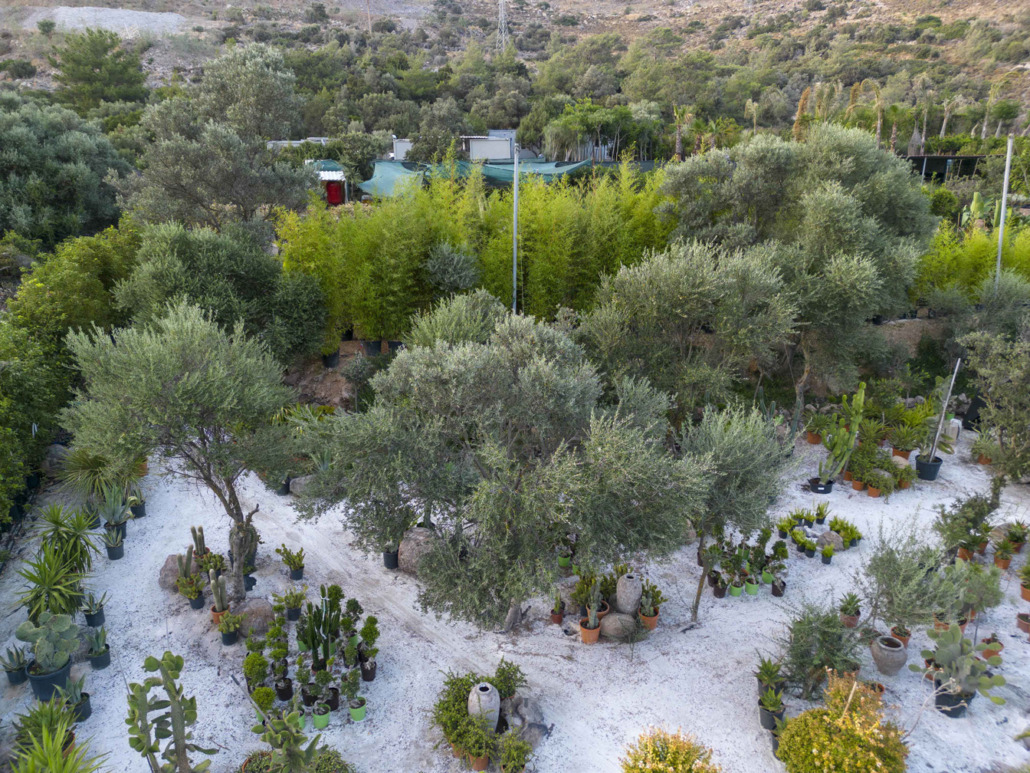
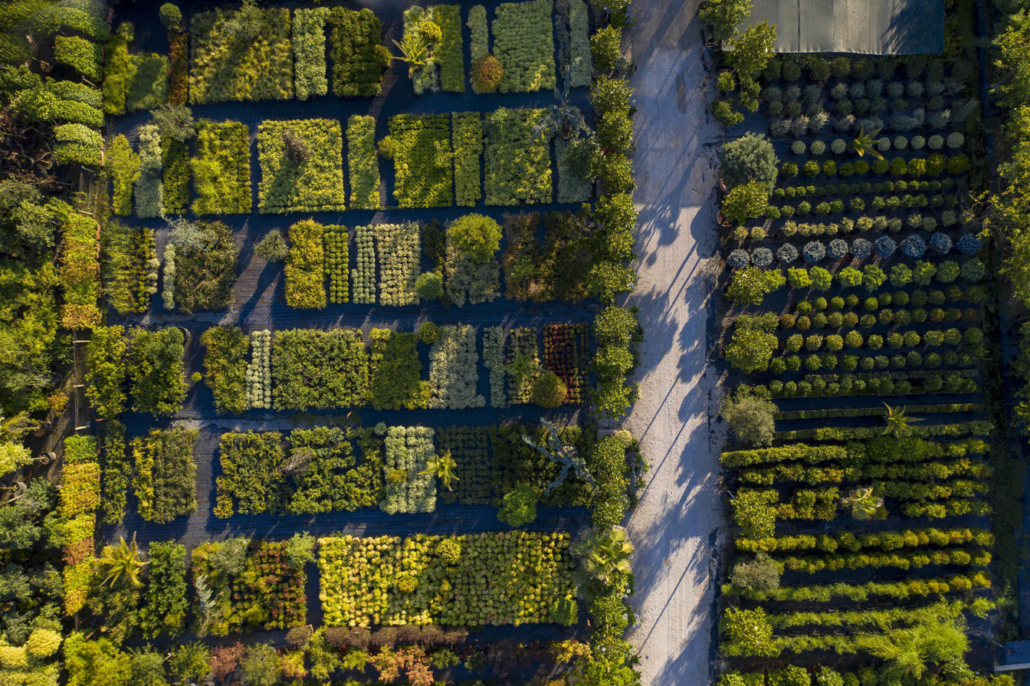
Instead of fast-growing species, working with large trees cared for in the nursery for years makes the garden look mature from day one. This approach is especially advantageous for slow-growing but valuable species such as olive, magnolia or cedar. Transporting large trees, preparing the planting pit, anchoring and the first-year watering programme require expertise; when done correctly, establishment rates are high.
At Işık Peyzaj, in our Riva, Bodrum and Yalova nurseries we prepare locally grown species as well as species selected from Europe, South America and the Far East for projects, and we take care of planting and early maintenance as part of our softscape works.
Technical Points in Tree Planting
- The planting pit should be at least twice as wide as the root ball, and the root collar should not be buried below soil level.
- In heavy clay soils, drainage measures should be taken so that water does not collect at the bottom of the pit.
- Large trees should be secured against wind with stakes or underground anchoring systems.
- Regular, deep watering for the first two years is the most critical condition for root development.
- For sensitive species planted before winter, frost and cold protection measures should be planned.
Frequently Asked Questions
What is the best evergreen tree for a garden?
It depends on the region. Olive, holm oak and strawberry tree do well in the Aegean and Mediterranean; magnolia, cedar and cherry laurel in the Marmara region.
How far from the house should trees be planted?
As a general rule, leave a distance equal to the tree’s mature canopy radius. For species with aggressive roots, this distance should be increased further.
What is the best season for planting trees?
Autumn is the best time for root development thanks to warm soil and rainfall. Container-grown trees can also be planted safely at other times, except midwinter and the heat of summer.
Which tree is suitable for a small garden?
Strawberry tree, pencil cypress, olive, crape myrtle and small maples can be used even in limited spaces without upsetting the scale.
To choose the best trees for your garden together and see the options in our nurseries in person, get in touch with us.