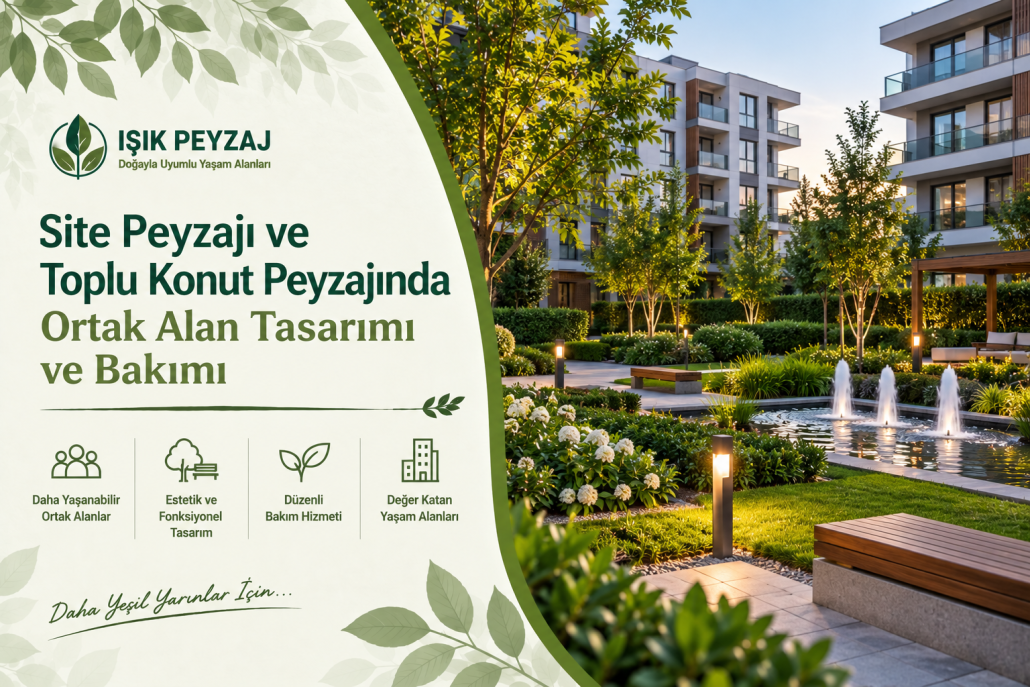
Shared green spaces are one of the most tangible factors in the quality of communal living, and a well-planned residential complex landscape directly affects both residents’ everyday comfort and property value. Lawns between blocks, walkways, areas where children spend time and shaded rest spots form a complex’s identity. Designing these areas according to a plan rather than at random creates an environment that is green, safe and economical to maintain throughout the seasons.
In this article we look at the scope of shared-space landscaping in residential complexes, design principles, plant selection, irrigation automation, periodic maintenance planning and the cost balance from a management perspective. Managers who want to see the planting side in more detail can start by reviewing the scope of our softscape service.
The Scope of Residential Landscaping
Landscaping a residential complex is not just about sowing grass or planting a few trees. The layout, drainage, balance of hard and soft surfaces, lighting, furniture placement and planting texture of the shared area are planned as a whole. As hundreds of people share the space, the design is shaped by durability under intensive use, accessibility and ease of maintenance. When defining the scope, the size of the complex, the number of owners, climate conditions and existing infrastructure are assessed together.
Design Principles for Residential Complexes
A sustainable shared landscape is built by bringing functional zones together without them interfering with each other. The sub-headings below summarise the main use zones that guide the design.
Shared Living and Social Areas
Seating groups, canopies and small green squares where residents gather form the social backbone of the complex. Shade trees, benches and well-oriented walkways create a peaceful green fabric at these points.
Children’s Play and Rest Areas
Areas where children spend time are planned with safe surfacing, shade and sight lines so they can be watched from the blocks. Placing rest areas next to play areas makes it easier for families to spend time together. Landscape furniture solutions can be considered for safe surfacing and equipment.
Walkways and Hard Surfaces
Paths linking the shared area should be usable after rain and non-slip. The right choice of material means long life and low maintenance; for surface types and durability, our guide to choosing natural stone paving is a useful reference.
Car Parks and Entrances
The entrance to a complex shapes the visitor’s first impression. Planting along the entrance axis, shading around car parks and wayfinding landscaping are planned for both aesthetics and traffic safety.
Plant Selection: Low-Maintenance, Durable Species
In residential complexes, plant selection is based on sustainability before aesthetics. Species suited to the regional climate, with low water use and good disease resistance, are preferred. Ground covers reduce lawn area and the maintenance burden; shrub groups and perennials provide seasonal colour without frequent intervention. A plant palette dominated by native species reduces both irrigation costs and the need for fertiliser. Large-scale examples of this approach can be seen in ecology-focused projects such as Baruthane Ecological Park.
Irrigation and Automation
Hand watering large shared areas is neither efficient nor economical. Automatic irrigation systems prevent water waste by zoning drip and sprinkler lines according to plant type. Automation using moisture and rain sensors stops unnecessary watering and noticeably lowers water bills. Timed systems water in the early hours, reducing evaporation losses and keeping lawns healthy. A well-designed system brings one of the biggest items of complex garden maintenance under control.
Periodic Maintenance and Management Plan
Good design gains value with regular maintenance. Residential landscape maintenance is sustained by scheduling tasks such as mowing, pruning, feeding, weed control, disease monitoring and seasonal plant replacement. The management plan clearly defines which tasks are done how often, who the responsible team is and how the budget is allocated. Monthly reporting gives the owners’ board transparent monitoring and allows potential problems to be solved before they grow. Planned maintenance significantly reduces sudden, expensive interventions.
Balancing Cost and Sustainability
For management, landscaping is both an investment and a recurring expense. Choosing low-maintenance plants and durable surfaces in the initial investment lightens the burden on service charges in the long run. As water, fertiliser and labour make up most of the total cost, automation and the right choice of species translate directly into savings. A sustainable approach is environmentally responsible and also makes the budget predictable. The green space investment thus becomes an asset that holds its value rather than an expense that rises year after year.
Professional Support
The multi-user nature of shared spaces takes the work beyond one person’s ongoing oversight to the level of a professional service. A professional team handles the process under one roof, from design to installation and from irrigation set-up to periodic maintenance. This avoids management having to deal with multiple contractors and keeps responsibility clear. An experienced contractor sets up a maintenance schedule suited to the complex’s particular conditions, keeping green spaces well kept all year.
Common Mistakes in Residential Landscaping
- Too much lawn: Large lawns bring high water and mowing costs; if not balanced with ground covers and shrub groups, the maintenance burden multiplies.
- Unplanned plant selection: Species unsuited to the climate soon weaken, need frequent replacement and strain the budget.
- Neglecting irrigation: Hand watering without automation leads to both water waste and uneven growth.
- Postponing maintenance: Tasks that pile up without a periodic schedule turn into costly large-scale interventions later.
Frequently Asked Questions
How often should residential landscape maintenance be carried out?
Frequency varies by season. In spring and summer, lawns are mown weekly while pruning and feeding are seasonal; in autumn and winter interventions become less frequent. The best approach is an annual maintenance schedule tailored to the complex.
Which plants need less maintenance in residential complexes?
Native species suited to the regional climate, drought-tolerant shrubs, perennials and ground covers need less water and attention. These species reduce both the maintenance burden and irrigation costs.
How does landscape maintenance affect service charges?
Low-maintenance plants, automatic irrigation and planned maintenance make recurring costs predictable. When the initial investment is made correctly, the landscaping share of service charges falls noticeably in the long run.
Can the landscaping of an existing complex be renewed?
Yes. A phased renewal plan can be drawn up by assessing the existing infrastructure and planting. Problem areas are prioritised and irrigation and surfaces improved, achieving lasting results without starting from scratch.
If you would like to create a design and sustainable maintenance plan for your complex’s shared spaces, contact the Işık Peyzaj team to explore a solution that suits your management.