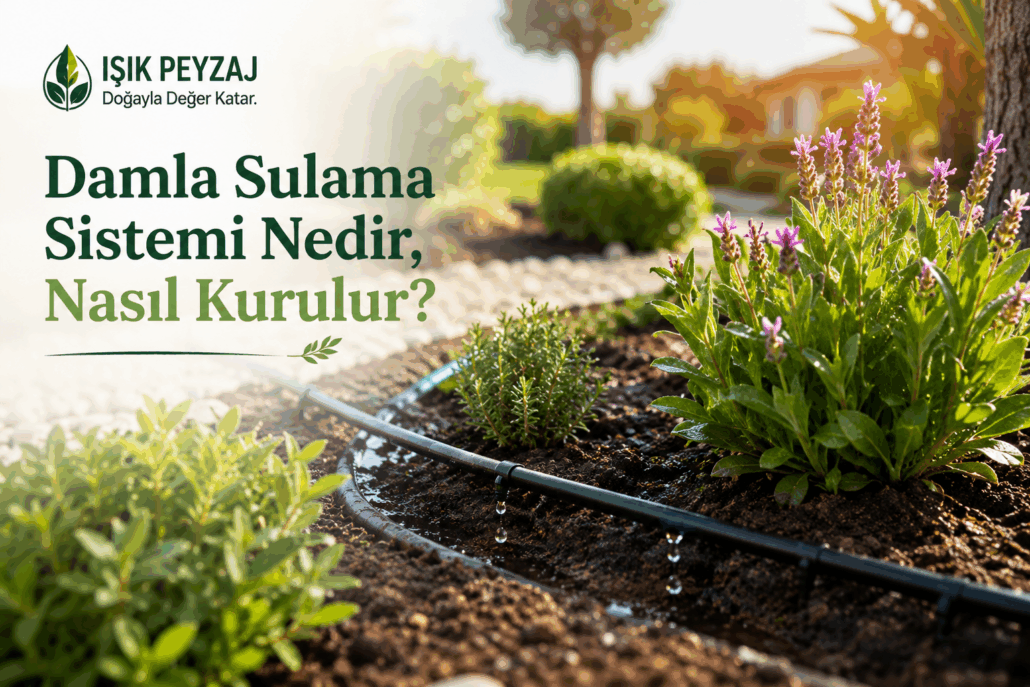
In gardens, farmland and landscape projects, regular and controlled irrigation is essential for healthy plant growth. Traditional irrigation methods often use more water than necessary and can make it hard to distribute the water plants need evenly. This is where a drip irrigation system stands out as a modern irrigation method that delivers water directly to the root zone, saving water and supporting plant growth.
Used especially in regions where water consumption rises in summer, drip irrigation systems prevent unnecessary water loss through controlled watering while helping to maintain the moisture plants need. With uses ranging from landscaped gardens to orchards and from vegetable plots to villa gardens, these systems have become an essential part of professional landscape projects today.
Well-planned irrigation infrastructure does more than support plant growth; it makes maintenance easier, reduces labour and saves a significant amount of water in the long run.
What Is a Drip Irrigation System?
A drip irrigation system is a pressurised irrigation method that delivers water at a low flow rate, in a controlled way, directly to the plant’s root zone. Water is carried through pipes and emitters to set points, so only the area that needs it is watered.
With this method:
- Water loss is kept to a minimum.
- Soil moisture stays balanced.
- Plants are fed regularly.
- Weeds are reduced.
- The risk of disease falls.
- Irrigation can be automated.
In large gardens and professional landscape projects in particular, a drip irrigation system is both an economical and an environmentally friendly solution.
How Does a Drip Irrigation System Work?
The system works on a very simple principle. Water taken from the source passes through a filter unit and into the main pipes. Emitters on the lateral pipes connected to the mains deliver a set amount of water directly to the plant’s root zone.
With this controlled system, water does not pool on the surface and evaporation losses fall significantly. And because the root zone stays at a steady, balanced moisture level, plants grow more healthily.
In systems backed by automatic controllers, watering times and durations can be programmed in advance, so irrigation runs regularly without any user intervention.
The Main Components of a Drip Irrigation System
A well-functioning drip irrigation system is made up of different pieces of equipment that work together.
Water Source
Mains water, a tank, a well or other water sources form the starting point of the system.
Filter Unit
A filter is needed so that sand, sediment and debris in the water do not clog the emitters.
Cleaning the filter regularly is one of the key maintenance tasks that directly affects system performance.
Main Pipes
These are the main lines that carry water from the source to the irrigated area.
Choosing the right pipe diameter keeps the system running evenly.
Emitters
Emitters are the most important equipment, as they determine how much water reaches each plant.
Emitters with different flow rates can be used depending on the plant species and its water needs.
Control Valves and Timer
In automatic systems, watering times and durations can easily be set with timers.
This optimises water use and saves the user a great deal of time.
What Are the Benefits of a Drip Irrigation System?
Compared with traditional irrigation methods, drip irrigation systems offer many advantages.
The main benefits are:
- They save water.
- They help water plants only as much as they need.
- They reduce water lost to evaporation.
- They limit weed growth.
- They make fertilising easier.
- They reduce labour.
- They support even plant growth.
- They lower maintenance costs in the long run.
Thanks to these features, drip irrigation has become one of the most popular irrigation methods in both private gardens and professional landscape projects.
How Is a Drip Irrigation System Installed?
For a successful drip irrigation system installation, the area to be irrigated must first be analysed properly. Factors such as the size of the garden, plant species, slope and the location of the water source directly affect system planning.
Installation generally consists of the following steps:
1. Site Analysis
First, the position of the plants in the garden is mapped and their water needs are assessed. Grouping plants with the same water needs on the same irrigation line makes the system more efficient.
2. Project Planning
The layout of the main pipes, laterals and emitters is set. At this stage, water pressure and pipe lengths are calculated so that the system delivers an equal amount of water to every point.
3. Laying the Main Pipes
Starting from the water source, the main lines are laid along suitable routes. Planning the pipes so they are protected from sunlight and other external factors extends the system’s service life.
4. Fitting the Emitters
Emitters are fitted at suitable intervals at the plants’ root zones. As each plant’s water needs may differ, emitter flow rates are chosen accordingly.
5. Testing and Adjustment
Once installation is complete, the system is run to check that water reaches every point evenly. Flow and pressure are adjusted where necessary and the system is made ready for use.
Common Mistakes in Drip Irrigation Systems
Irrigation systems that are not planned properly may not perform as expected. Small mistakes made during installation can, over time, lead to water loss and problems with plant growth.
The most common mistakes are:
- Not planning irrigation by plant species.
- Using inadequate filtration.
- Choosing the wrong emitter flow rate.
- Running the system at too low or too high a water pressure.
- Getting pipe diameters wrong.
- Neglecting regular maintenance and filter cleaning.
- Not updating seasonal irrigation schedules.
To avoid these mistakes, the system should be planned professionally and checked at regular intervals.
How Should Drip Irrigation Systems Be Maintained?
Like any irrigation system, drip irrigation systems need regular maintenance. Periodic checks preserve system performance and allow faults to be fixed before they grow.
The main maintenance tasks are:
- Clean the filters regularly.
- Check the emitters at regular intervals.
- Inspect pipe connections for leaks.
- Adjust the irrigation schedule to the season.
- Check pressure readings at regular intervals.
- Take the necessary precautions in winter in areas at risk of frost.
Systems that are maintained regularly can be used efficiently for many years, and unexpected breakdowns can be avoided.
Who Is a Drip Irrigation System Suitable For?
This system is ideal not only for agricultural producers but for many other uses too.
A drip irrigation system can easily be used in:
- Villa gardens,
- Residential complex and housing landscapes,
- Parks and green spaces,
- Orchards,
- Vegetable plots,
- Hotels,
- Restaurant gardens,
- Commercial landscape projects.
Systems planned correctly for the plant species and the size of the area save water and make maintenance much easier.
Conclusion
A drip irrigation system is one of the most effective irrigation methods, using water resources efficiently, supporting plant growth and making maintenance easier. With proper planning, quality equipment and regular maintenance, the system can perform well for many years.
Controlled irrigation is essential for the healthy growth of plants used in landscape projects. That is why drip irrigation systems planned to suit the needs of the site stand out as a sustainable, economical and environmentally friendly solution in both private gardens and professional landscape projects. With systems installed by expert teams and maintained regularly, water use is optimised and living spaces keep their good looks for many years.