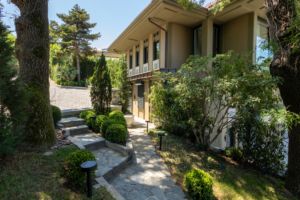
A garden’s footpaths determine how that garden is experienced. Paths don’t just get you from one point to another; they divide the garden into zones, direct views and create rhythm and a sense of discovery. A well-designed footpath forms the visual backbone of the landscape, while a poorly planned one disrupts the garden’s flow and use.
In this guide we look at the basic principles of garden footpath design, material options, installation techniques and common mistakes. The information applies at every scale, from home gardens to hotels and public spaces.
For detailed information on our hardscape services, visit our service page.
Basic Principles of Footpath Design
Follow Natural Lines of Movement
A good footpath is designed around how people actually move. People take the shortest, most natural route between two points. Paths that ignore this line of movement go unused; people cut across the lawn and wear down the edges of the path. The design should anticipate real behaviour.
Width and Scale
Footpath width depends on its purpose. A garden trail for one person and a main axis where two people can walk side by side need different widths. As a general starting point, a minimum of 120 cm suits main paths and 60–90 cm suits secondary trails. Scale should also be in proportion to the size of the garden.
Straight or Curved?
Straight paths feel formal, clear and quick; they suit entrances and axial layouts. Curved paths create a sense of discovery, make the garden feel larger and give a natural flow. A curve should have a purpose — going around a group of plants or opening up a view. Curves without a reason look artificial.
Footpath Material Options
Natural Stone
The most durable and attractive material for footpaths. Granite, travertine, basalt and slate are long-lasting options that age beautifully. Neatly cut slabs give a formal look, while irregular broken stone (crazy paving) creates a natural, rustic feel.
For types of natural stone and their technical properties, see our guide to natural stone paving.
Stamped Concrete
An economical option made by patterning a concrete surface, which can imitate natural stone or timber. It is a cost-effective solution for wide footpaths and high-traffic areas. It is durable and comes in a range of patterns.
Concrete Slabs and Pavers
Precast concrete slabs give a regular, modern look. Large-format slabs give a clean aesthetic on wide paths. Leaving grass or gravel between them can also create a soft transition.
Gravel and Crushed Stone
An economical option that aids drainage and feels natural. The sound it makes underfoot is part of the atmosphere in some gardens. But remember that gravel paths need edging and periodic top-ups.
For detailed information on decorative gravel and crushed stone installations, see our dedicated guide.
Timber and Composite
Timber decking or composite walkways give a warm feel, especially where they connect to terraces and around pools. Durable outdoor species (teak, iroko) or maintenance-free composite should be chosen.
You can find out more about our landscape timber works.
Stepping Stones
Individual stones set at intervals in grass or gravel give a light, natural route. They are an elegant way to create a path without breaking up the garden’s green texture. Spacing them to match a natural stride is important for comfort.
The Footpath Installation Process
How long a footpath lasts depends as much on the quality of installation as on the material.
1. Setting Out the Route and Excavation
The route is marked out and excavated to a suitable depth. The depth depends on the material and the thickness of the sub-base. Insufficient excavation leads to sinking and deterioration later on.
2. Preparing the Sub-base
The excavated ground is compacted and a suitable aggregate (crushed stone) sub-base is laid. This sub-base provides the path’s load-bearing capacity and drainage. If compaction is insufficient, the path settles and becomes uneven over time.
3. Drainage Fall
The footpath should be laid with a slight fall (at least two percent) to shed rainwater. Paths where water collects are uncomfortable to use and deteriorate over time. In areas at risk of frost, drainage is especially critical.
4. Laying the Surface and Edging
The chosen material is laid with the appropriate technique. On gravel and irregular stone paths, edging stops the material spreading. With natural stone and slabs, joint widths and expansion gaps must be left correctly.
For proper infrastructure and drainage, you can make use of our landscape infrastructure services.
Footpaths and Lighting
Footpaths should be lit for safety and atmosphere at night. Low-level path lights, recessed ground spots or path-side lighting provide safe passage and enhance the garden’s night-time atmosphere. Lighting works best when it is planned together with the path layout.
You can find out more about our landscape lighting solutions.
Footpaths by Project Type
Homes and villa gardens: natural stone, stepping stones and winding trails create an intimate feel. Aesthetics and personal use come first.
Hotels and resorts: paths need to be wide, durable and suited to heavy traffic. Natural stone and stamped concrete stand out in these projects.
Public spaces and parks: accessibility standards, high durability and ease of maintenance are decisive. Surfaces suitable for disabled access are mandatory.
You can see our work across different project types on our reference projects page.
Common Mistakes in Footpath Design
Ignoring natural lines of movement. If there is no path where people want to go, they cut across the lawn and the path loses its purpose.
Neglecting the sub-base. An inadequate sub-base and poor compaction cause even the best surface to sink quickly.
Skipping drainage. Paths without a fall hold water, which spoils both comfort and the surface.
The wrong width. Paths that are too narrow are hard to use; unnecessarily wide paths eat into the garden’s green space.
Forgetting edging. On gravel paths especially, material spreads without edging and the path breaks up.
Footpath Design with Işık Peyzaj
At Işık Peyzaj we manage the entire footpath process, from advice on choosing materials and preparing the sub-base to drainage solutions and integrated lighting. We bring the experience gained on residential, hotel, commercial and public projects to every project with our ISO 9001 certified quality standard.
You can explore our hardscape service page or request a meeting about your project through our contact form.