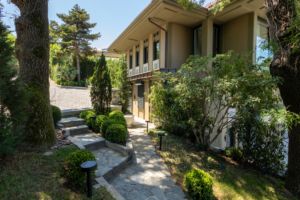
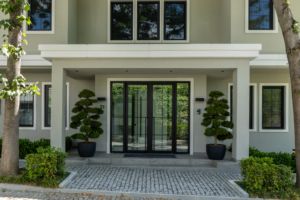
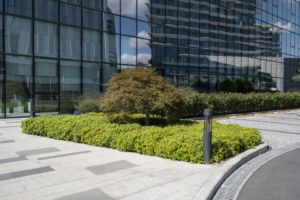
When people think of landscaping, plants usually come to mind first. Yet the backbone of a good landscape is the hardscape. Footpaths, terraces, retaining walls, steps, seating areas and paving determine how a space is used, moved through and lived in. Plants are the soft layer laid over this framework.
In this guide we look at what hardscape landscaping is, which materials are used for which purpose, the technical details of installation and the principles of design. The information applies at every scale, from home gardens to large commercial projects.
For detailed information on our hardscape services, visit our service page.
What Is Hardscape?
Hardscape refers to the non-living, structural components of a landscape. Everything other than the planted elements (softscape) falls into this category: stone, concrete, timber, metal, water features and the structural elements they form.
In a good landscape design, hardscape and softscape work in balance. Too much hard surface feels cold and rigid, while too little makes the space hard to use. This balance determines the success of the design.
Hardscape Elements
Paving
The surfaces that form footpaths, terraces and seating areas. Natural stone, concrete, stamped concrete, porcelain and timber decking are the most common options. Paving is the largest and most heavily used hardscape element in a landscape.
Retaining and Boundary Walls
Used to hold back soil on slopes, create terraces and define the boundaries of a space. Natural stone, concrete and gabion (stone-filled cage) systems are preferred. Retaining walls serve both structural and aesthetic purposes.
Steps and Ramps
Elements used to deal with changes in level. Designing them correctly is critical for both function and safety. Compliance with accessibility standards is mandatory, especially in public and commercial projects.
Pergolas, Gazebos and Shade Structures
Structures that provide shade, define a space and create vertical emphasis. They are made from timber, metal and composite materials, and directly increase the comfort of outdoor areas.
Our landscape timber works and metal works cover the manufacture and installation of these structures.
Water Features
Pools, ponds, waterfalls, water curtains and fountains are hardscape elements that enrich the landscape’s visual and acoustic atmosphere.
Find out about our water feature services.
Hardscape Materials and Their Uses
Natural Stone
Granite, travertine, basalt, limestone and slate are the most durable and attractive outdoor materials. Chosen and installed correctly, they keep their value for decades and age beautifully.
For types of natural stone, their technical properties and uses, see our guide to natural stone paving.
Stamped Concrete
An economical, durable surface made by patterning concrete with moulds while it is still fresh. It can imitate natural stone or timber. It is a cost-effective solution for high-traffic areas, car parks and large surfaces.
Advantages: economical compared with natural stone, quick to lay on large surfaces, a range of patterns and colours, high durability.
Note: the protective surface sealer must be renewed periodically; otherwise wear and fading can appear over time.
Timber and Composite Decking
Gives a warm, natural feel on terraces, around pools and on walkways. Durable species such as teak and iroko are preferred for natural timber, with maintenance-free composite decking as the alternative.
Natural timber: a warm look and natural texture, but needs periodic oiling.
Composite decking: maintenance-free and long-lasting, but doesn’t fully match the texture of natural timber.
Concrete and Precast Elements
In modern landscaping, concrete is not just an infrastructure material but a design element. Polished concrete floors, precast concrete seating units and concrete kerbs are often used in contemporary projects.
Gravel and Aggregate
A low-cost surface material that aids drainage and feels natural. It is used for decorative gravel surfaces, as ground cover between plants and in drainage areas.
The Hardscape Installation Process
Hardscape installation is one of the most technical and critical stages of landscaping. Hardscape that is installed incorrectly soon sinks, cracks or causes water problems.
1. Prepare the Ground
The foundation of all hardscape work is solid ground preparation. The ground is excavated, levelled and compacted. Work laid on loose or poorly compacted ground sinks over time. This stage is the most critical step in determining how long the hardscape will last.
2. Drainage Design
Hardscape areas should be designed to shed rainwater. A minimum fall of two percent, drainage channels on surfaces where water collects and, where needed, an underground drainage system are planned. When drainage is neglected, standing water causes both discomfort and damage to the surface.
We design and install drainage systems as part of our landscape infrastructure services.
3. Foundation and Sub-base
A sub-base suited to the type of paving (aggregate, concrete screed or sand bed) is prepared. This layer spreads the load of the paving and ensures it beds down evenly.
4. Laying the Surface
The chosen material is laid in line with its technical rules. Details such as joint widths and expansion gaps for natural stone, ventilation gaps for timber decking and the correct curing time for stamped concrete are critical at this stage.
5. Jointing and Finishing
Joints are filled, the surface is cleaned and the necessary protective coatings are applied. Water-repellent impregnation for porous stone, protective oil for timber and surface sealer for concrete are applied at this stage.
Hardscape Design Principles
Hardscape–Softscape Balance
The secret of good landscaping is the balance between hard surfaces and planted areas. As a general approach, hardscape makes up about a third of the area and planting about two thirds, but the ratio varies with the purpose of the project. In heavily used commercial areas the share of hardscape rises, while planting dominates in gardens made for relaxing.
Material Continuity
Using many different materials fragments a space and makes it feel cluttered. A limited number of materials, a repeated language and a harmonious colour palette bring the space together.
Flow and Circulation
Footpaths should follow natural lines of movement. A design that considers how people actually move is both functional and comfortable. Artificial, forced routes go unused and get worn down by shortcuts.
Scale and Proportion
Hardscape elements should be in proportion to the scale of the space. Small paving units look scattered in a large area, while large elements feel overpowering in a small one.
Common Mistakes in Hardscape Projects
Underestimating ground preparation. Poor compaction and a faulty foundation cause even the best material to sink quickly.
Ignoring drainage. Hardscape built without planning for water ends in standing water and surface damage.
Matching the wrong material to the use. Slippery polished stone around a pool or non-durable material in a high-traffic area are common mistakes.
Not leaving expansion gaps. Material that expands with temperature changes cracks if there is not enough space.
Not balancing hardscape and softscape. Too much hard surface feels cold and rigid, and should be softened with planting.
Işık Peyzaj Hardscape Works
At Işık Peyzaj we manage the entire hardscape process, from advice on choosing materials and ground preparation to drainage design, installation and finishing. We carry out natural stone, stamped concrete, timber decking, water feature and metal structure works with our ISO 9001 certified quality standard.
For your hardscape project, you can explore our service page, see the projects we have completed on our references page or request a meeting through our contact form.