Choosing outdoor paving is both an aesthetic and a technical decision. The wrong material cracks, becomes slippery, fades or fails to withstand the climate over time and needs replacing. Natural stone, on the other hand, chosen and installed correctly, keeps its aesthetic and structural value for decades.
In this guide we look at the most common types of natural stone paving, the technical properties of each, which uses they suit and what to watch out for during installation.
For detailed information on our hardscape services, visit our service page.
Why Natural Stone?
Now that artificial alternatives such as porcelain, concrete and composites are widespread, there are concrete reasons to choose natural stone.
Long life: Chosen and installed correctly, natural stone keeps its aesthetic and structural value for more than 50 years. Most artificial alternatives can’t match this.
Patina: Natural stone ages beautifully. Stones such as granite, travertine and basalt deepen a space’s character with the texture they gain over the years. This effect can’t be achieved with artificial materials.
Thermal comfort: Light-coloured natural stones absorb far less heat from the sun than dark concrete. If you want a surface you can walk on barefoot in summer, choosing a light stone is decisive.
Harmony with the environment: A natural material sits in visual harmony with its natural setting. In landscape projects, the combination of plants and natural stone creates a sense of unity that synthetic materials can’t achieve.
Types of Natural Stone and Their Technical Properties
Granite
One of the strongest and most durable natural stones for outdoor use. Thanks to its high density, it is extremely resistant to wear, frost and staining.
Technical properties: very low water absorption (0.1–0.4 percent), high compressive strength and resistance to freeze–thaw cycles.
Surface finishes: polished, honed, flamed and split-face options are available. Outdoors, a flamed or split-face finish should be chosen for slip resistance.
Uses: high-traffic areas, building entrances, footpaths, stair treads and commercial paving.
Note: polished granite carries a high risk of slipping when wet. For outdoor use, always choose a honed or flamed finish.
Travertine
With its warm tones typical of the Mediterranean, travertine is the most widely used natural stone in Turkey. A large share of the world’s reserves are in Turkey, so it offers one of the best price-to-quality ratios.
Technical properties: medium density, porous structure, higher water absorption than granite (1–3 percent). Without proper maintenance, its porous structure can make it vulnerable to stains and frost.
Surface finishes: filled (pores filled, smooth), unfilled (natural pores, rustic look), honed and tumbled (aged) options are available.
Uses: villa and residential terraces, pool surrounds, garden footpaths and hotel outdoor areas.
Maintenance note: applying a water-repellent impregnator to outdoor travertine once or twice a year protects the pores and supports a long life.
Basalt
A dark, extremely dense stone of volcanic origin. It has a strong aesthetic language and pairs very well with modern architecture.
Technical properties: very low water absorption (0.1–0.3 percent), extremely resistant to frost and weather, high wear resistance.
Surface finishes: split face (natural texture, high slip resistance), flamed and engineered finishes.
Uses: modern villa and hotel projects, urban landscape schemes, road and square paving, and pool edges.
On hot summer days, basalt’s dark colour absorbs more of the sun’s heat than travertine. In areas with heavy barefoot use, combining it with light-coloured travertine has become a popular choice for both looks and comfort.
Limestone
A medium-density stone with a warm, organic look, favoured especially in projects that blend with nature. Cream, beige and light grey are the most common colours.
Technical properties: water absorption similar to travertine, medium strength; it may change colour slightly after long exposure to the sun.
Uses: garden footpaths, terraces and landscape projects where a natural look comes first.
Note: it is not as durable as granite under heavy traffic and loads. Matched to the right use, it lasts a long time.
Slate
With its layered structure and distinctive texture, slate is used outdoors especially for footpaths and decorative surfaces. It has natural colour and gives a crisp, contemporary look.
Technical properties: low water absorption and high frost resistance; quality control is important because of the risk of the layers separating.
Uses: footpaths, garden edging and decorative paving accents.
Key Criteria for Choosing Paving
To choose the right stone, you need to answer these questions:
How Heavily Will It Be Used?
A hotel entrance used by thousands of people a day and a garden path in a private villa walked on a few times a week don’t need the same material. In high-traffic areas, stones with high wear resistance — granite and basalt — should be chosen.
What Is the Climate?
In regions with winter frost, the stone’s freeze–thaw resistance becomes a critical criterion. Porous stones (travertine, limestone) can absorb water and become vulnerable to frost. Impregnation and proper drainage design reduce this risk.
Is the Slip Resistance Sufficient?
Surfaces with high slip resistance (R value) are essential for pool edges, terraces that get wet in the rain and stair treads. Polished granite or any stone with a smooth finish carries a high risk of slipping when wet. In these areas, a sandblasted, flamed or split-face finish should be chosen.
What Is the Aesthetic Language?
For modern, minimal architecture, basalt’s dark tone and crisp lines are a strong match. For a warm, organic language, the beige and cream tones of travertine or limestone are more suitable. For a rustic, natural look, slate or unfilled travertine can be chosen.
Installation: The Technical Details That Determine Quality
Even the best stone soon causes problems if installed incorrectly. The technical details that determine the quality of a paving installation are:
Preparing the Base
Levelling and compacting: before laying stone, the ground must be levelled and compacted properly. Stone laid on loose ground sinks and cracks over time.
Drainage fall: outdoor paving should be laid with a minimum fall of two percent to shed rainwater. On level paving, standing water damages both the stone and the base.
Mortar quality: the mortar should suit the weight of the stone and the conditions of use. Insufficient bonding strength causes the stone to move over time.
Joints and Expansion Gaps
Natural stone expands and contracts with temperature changes. If enough joint space isn’t left, the stones push against each other and crack. On large areas, expansion joints must be included at set intervals.
Impregnation and Surface Protection
Especially for porous stones (travertine, limestone), applying a water-repellent impregnator before installation and periodically afterwards prevents staining and frost damage. It doesn’t change the look of the stone but greatly extends its life.
You can find detailed information about our hardscape services and landscape infrastructure solutions.
Recommended Stones by Project Type
Luxury Villa and Residential Projects
Travertine (pool surrounds and terraces), granite (entrances and stair treads) and basalt (entrances and walkways in projects with modern architecture) are the most popular combination.
Hotels and Resorts
A standard approach is anthracite basalt or light travertine around the pool, granite for building entrances and main walkways, and a mix of split-face natural stone for decorative garden paths.
To learn about the materials and installation approaches we use in our hotel projects, see our reference projects.
Commercial Buildings and Shopping Centres
Because of high traffic, wear resistance becomes the most important criterion. Granite and basalt are the standard choices for these projects. Large-format stones (60×60 cm and above) give a clean, legible look over large areas.
Urban and Public Spaces
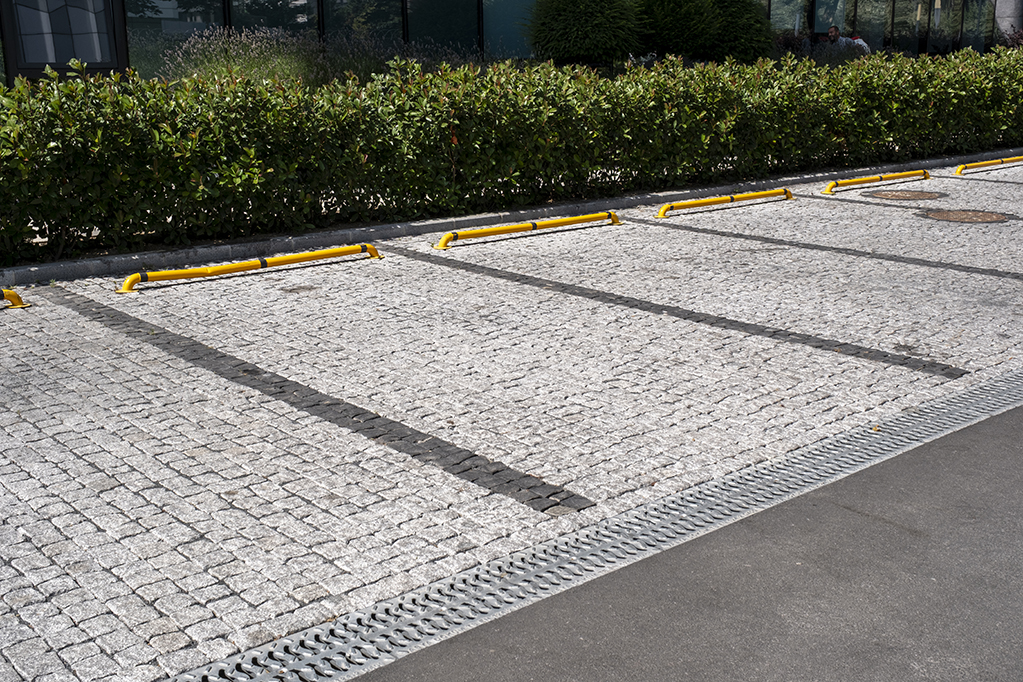
Heavy use, ease of maintenance and long life come first. Cobblestones and granite are the most common choices in this category. Compliance with accessibility standards for disabled people also directly affects the choice of material and surface finish.
Işık Peyzaj Hardscape Works
At Işık Peyzaj we manage the entire natural stone paving process, from advice on choosing materials to installation and from preparing the base to the final surface finish. You can see the experience we have gained on residential, hotel, commercial and public projects on our reference projects page.
You can visit our hardscape service page or request a meeting about your project through our contact form.