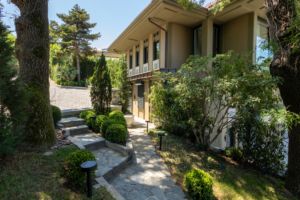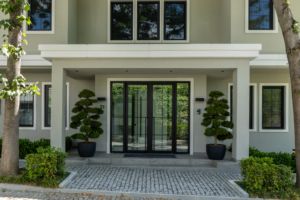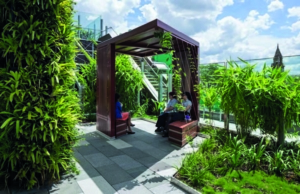
The main idea and principle is to use landscape design and landscape installations as a tool for health and healing.
In landscaping:
• Meditation areas
• Therapy gardens
• Sensory design
This movement overlaps a great deal with biophilic design; the biggest difference is that its main principle is more ’medical & psychological’.
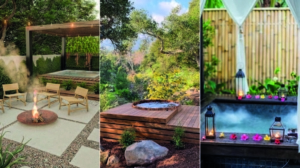
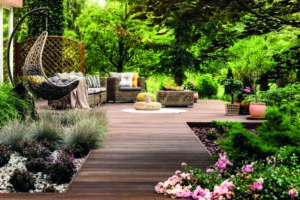
Its core philosophy is that nature is used not only for aesthetics but as a tool for physical and mental healing.
It is a deeper, more goal-oriented version of biophilic design.
What Does It Mean in Landscape Architecture?
• Stress-reducing spaces are planned
• Places for meditation and silence are created
• Sensory experience areas are designed
• The aim is to ’slow down’ with nature
The purpose of the space is to help the user relax.
1. Sensory Design (Multisensory Experience)
• Engaging the sense of smell (lavender, jasmine)
• Engaging the sense of hearing (water, wind)
• Providing visual stimulation (soft transitions)
• Encouraging the sense of touch (soft surfaces)
The overall aim is to calm the nervous system by stimulating the senses.
5 Basic Design Principles
1. Sensory Design (Multisensory Experience)
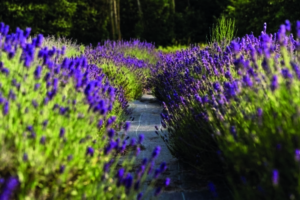
• Engaging the sense of smell (lavender, jasmine)
• Engaging the sense of hearing (water, wind)
• Providing visual stimulation (soft transitions)
• Encouraging the sense of touch (soft surfaces)
The overall aim is to calm the nervous system by stimulating the senses.
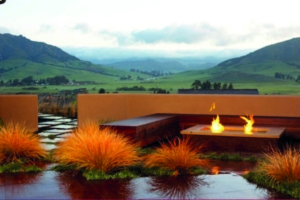
2. Water and Flow
• The sound of water reduces stress and brings calm.
• Reflections create mental tranquillity
Water is used in 80% of projects of this type.
3. Refuge Spaces
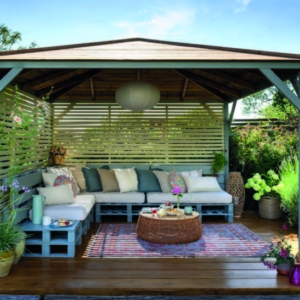
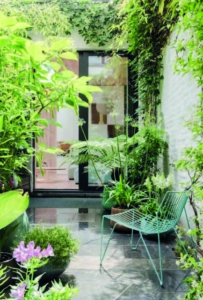
• Semi-enclosed spaces are created.
• Shade + privacy matter.
• Human nature needs shelter, and this need is met.
4. Slow Landscape
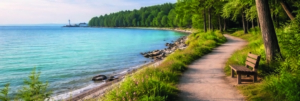
• Curved paths are used
• A natural flow is created
• Experience takes priority over speed
• In these spaces, staying matters more than passing through, and the whole design follows from this
5. Low Stimulation Design
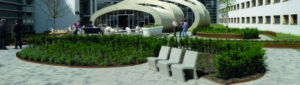
• Calm, not clutter, is the aim.
• Few colours and natural tones are used, with no mixing of colours
• Minimal but natural designs are the goal.
Design that doesn’t tire the mind
Where Is It Used?
• Hospitals (healing gardens)
• Hotels & spas
• Luxury residential projects
• Offices
• Rehabilitation centres
Especially powerful in the healthcare sector