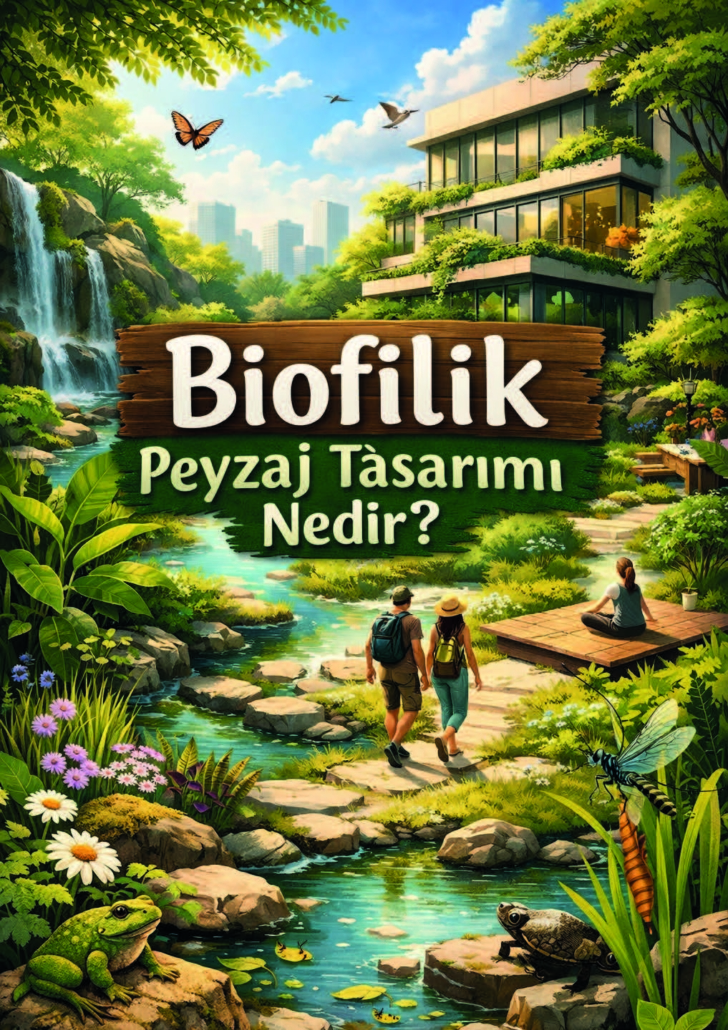
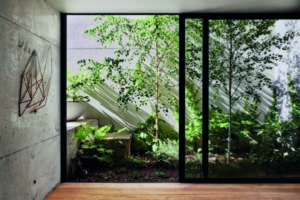
Biophilic design is an approach that aims to strengthen people’s innate bond with nature (biophilia) through design.
The concept is based on the Biophilia Hypothesis first put forward by Edward O. Wilson. It rests on the idea that people are healthier, happier and more productive when they are in contact with nature.
Main Aims
The main goals of biophilic design are:
- Strengthening our connection with nature
- Reducing stress and improving mental health
- Increasing productivity and creativity in spaces
- Creating sustainable, environmentally friendly spaces
The Key Elements of Biophilic Design
- Direct Contact and Interaction with Nature (Direct Nature)
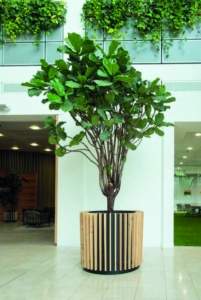
Physically bringing nature into the space:
- Plants, trees, green walls
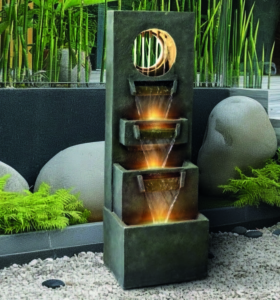
- Water features (pools, waterfalls, the sound of water)
- Natural light and airflow
- Indirect Contact with Nature (Indirect Nature)
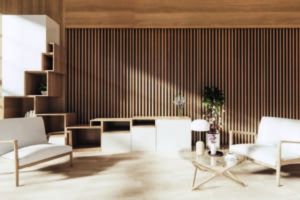
Elements that represent nature:
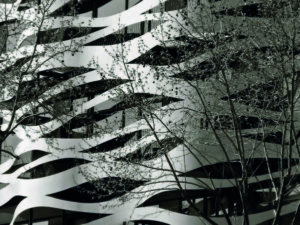
- Natural materials such as timber and stone are used
- Forms inspired by nature are applied (biomorphic design) • Natural colour palettes are brought to the fore (earth tones, greens)
- Spatial Experience
Arrangements that bring the feelings we have in nature into a space:
- Open views + shelter and privacy (Prospect & Refuge)
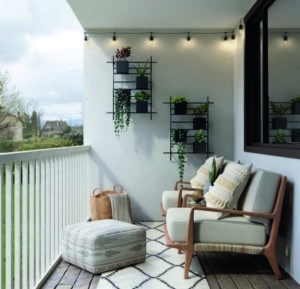
- Transition spaces (indoor–outdoor connection)
- A sense of mystery, discovery and flow
Scientific Benefits
Research shows that biophilic design:
- Can reduce stress by up to 30%
- Increases focus and productivity
- Balances heart rhythm and blood pressure
- Raises performance in the workplace
Where It Is Used
- Offices (companies such as Google and Amazon use it extensively)
- Hotels and resort projects
- Hospitals (to speed up recovery)
- Residential projects
- Urban landscapes and parks
Biophilic Design in Landscape Architecture
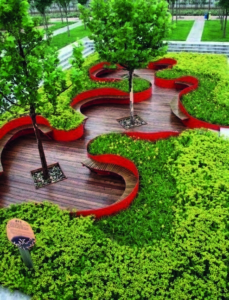
In landscape architecture, biophilic design treats nature not only as an aesthetic element but as an active system that meets people’s physical and psychological needs. This approach is based on the concept of biophilia set out by Edward O. Wilson and aims to strengthen the bond between people and nature through design.
In today’s cities, rapidly growing density, stress and disconnection from nature are turning landscape architecture from simply ’producing green space’ into a discipline of designing healing, experience-led spaces.
The Basic Approach of Biophilic Landscape Design
The essence of biophilic landscape design is not to imitate nature but to integrate its workings, rhythm and diversity into a space.
This approach is shaped along three main axes:
- Integrating Natural Systems
- Using local plant species
- Arrangements that make seasonal change tangible
- Treating spaces as a living ecosystem
- Including ecological cycles (water, soil, fauna) in the design
- Sensory Experience (Sensory Landscape)

- Using local plant species
- Arrangements that make seasonal change tangible
- Treating spaces as a living ecosystem
- Including ecological cycles (water, soil, fauna) in the design
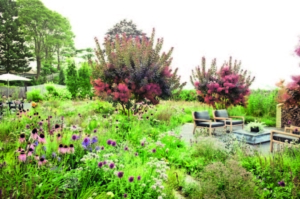
A biophilic landscape creates an experience that is not only visual but multisensory:
- Sight: layered planting, natural forms
- Hearing: the sound of water, plants moving in the wind
- Smell: aromatic species such as lavender, rosemary and jasmine
- Touch: different surfaces, bark textures
- The user’s relationship with nature is built through the senses.
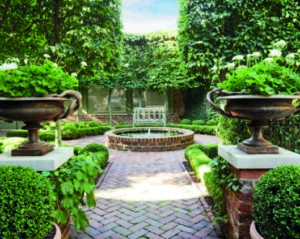
- Spatial Psychology (Prospect & Refuge)
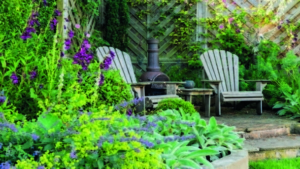
In nature, people prefer places where they feel safe. A biophilic landscape uses this instinct:
- Prospect: open views and vistas
- Refuge (Shelter): sheltered seating areas, semi-enclosed spaces
- Mystery: curving paths, a sense of discovery
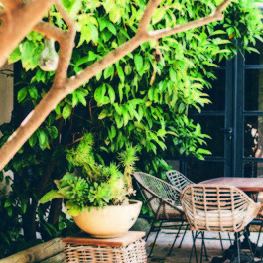
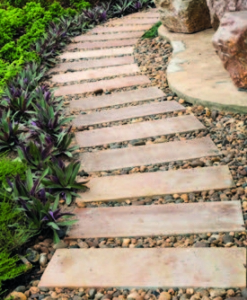
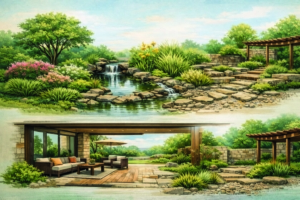
Design Principles (Practical)
Layered Planting
- A combination of trees + shrubs + ground cover • Creates the feel of a natural habitat
Using Water Features
- Natural-looking watercourses
- A microclimate effect
- Reflecting pools
Local and Adaptive Species
- Stronger ecological fit
- Less maintenance
Choosing Natural Materials
- Naturalness in the hardscape
- Stone, timber, gravel
Indoor–Outdoor Continuity
- Terraces, courtyards, semi-open spaces
- Flow between building and landscape
Biophilic Landscape at City Scale
The biophilic approach is a powerful tool not only for gardens but for urban design too:
- Green corridors
- Ecological parks
- Rain gardens and sustainable drainage systems
- Vertical gardens and green roofs
The World’s Most Successful Biophilic Landscape Designs
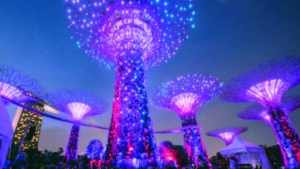
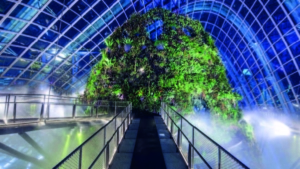
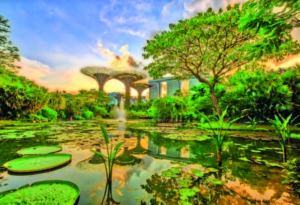
Gardens by the Bay – Singapore
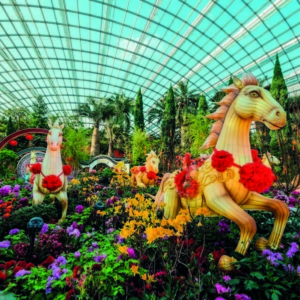
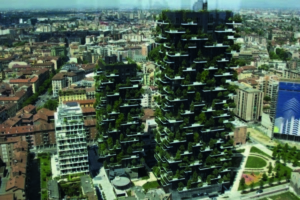
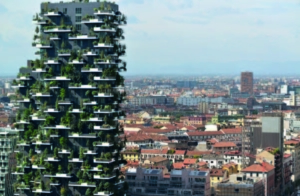
Bosco Verticale – Italy
- Seamless integration of artificial and natural systems
- Microclimate control (humidity, temperature, mist)
- Plants, water, light and technology work together
- In biophilic terms, it places people inside nature — it even recreates nature
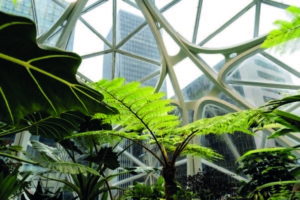
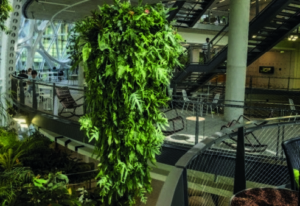
Amazon Spheres – USA
- The building itself was designed and built as a forest structure.
- More than 900 trees and thousands of plants were used
- In biophilic terms, it is a project that integrates architecture and landscape architecture.

Khoo Teck Puat Hospital – Singapore
- Work areas were designed and built as tropical gardens.
- More than 40,000 plants were used
- In biophilic terms, it creates a natural tropical forest working environment for staff.
- In biophilic terms, it places people inside nature — it even recreates nature
Parkroyal Collection Pickering – Singapore
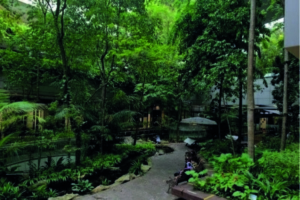
- The hospital’s open spaces were laid out as healing gardens.
- Every room has a view of nature, which provides an extra form of therapy that lifts patients’ spirits.
- In biophilic terms, it is a project that makes extremely successful use of the healing power of landscape.
Parkroyal Collection Pickering – Singapore
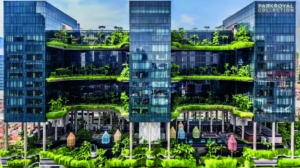
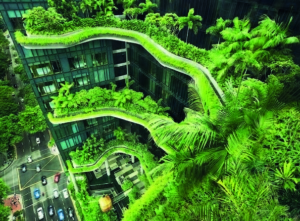
- Every part of the hotel is laid out like a tropical forest.
- The terraces are densely planted, giving the impression that the hotel has been placed inside a natural forest.
- Biophilic aspect: a green oasis has been created in the middle of the city
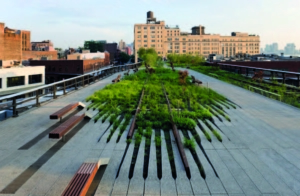
High Line – USA
- Its design offers a natural experience in the city, with a texture that captivates people
- It offers a walk surrounded by plants and the chance to interact with many rare and exotic species
- Biophilic aspect: it gives users a sense of natural succession
Changi Airport Jewel – Singapore
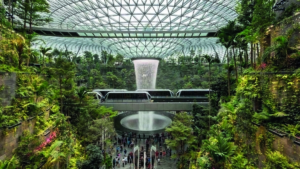
- It holds a unique place among examples of forest experiences created in a public space with a very specific purpose and fixed landscape standards, such as an airport. A significant number of people fly to Singapore just to have this experience.
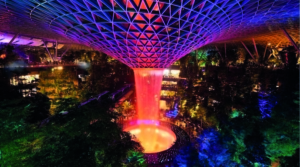
- The giant indoor waterfall offers a tremendous experience, both sensory and visual
- Biophilic aspect: it gives users a tremendous sensory experience.